
Why Are Young Children Prone to Middle Ear Infections? Understanding Correctly and Preventing Effectively
Many parents have experienced sleepless nights when their child develops a fever, becomes irritable, pulls at their ears, or has ear discharge – only to be diagnosed with a middle ear infection after seeing a doctor. Middle ear infections are very common in young children, yet they are often overlooked or not treated properly. Recurrent infections can affect a child’s hearing and even their speech and language development.
1. Why are young children more prone to middle ear infections?
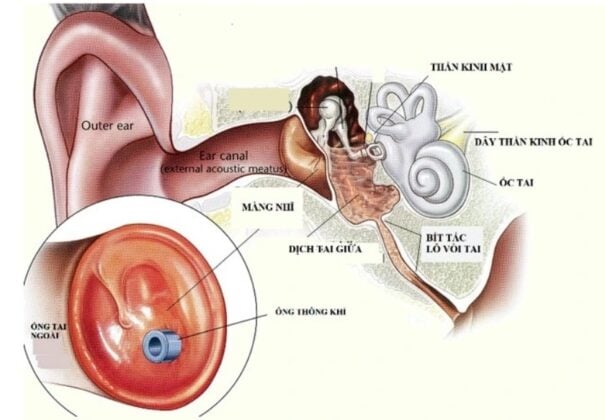
Inside the ear, there is a small canal called the Eustachian tube, which connects the middle ear to the back of the nose and throat, called the Eustachian tube. Its role is to balance pressure and drain fluid from the middle ear.
In young children, the Eustachian tube is shorter, more horizontal, and more easily blocked than in adults. As a result, when children have a cold, runny nose, or upper respiratory infection, bacteria and viruses can travel upward into the ear, causing fluid buildup and infection.
Factors that increase the risk include:
- Daycare attendance and frequent exposure to other children (higher risk of respiratory infections)
- Exposure to cigarette smoke or indoor air pollution
- Bottle-feeding while lying down or excessive pacifier use
- Lack of exclusive breastfeeding during the first 6 months of life
2. Early signs parents should watch for
Middle ear infections often develop after 3–5 days of a cold or prolonged runny nose.
Parents should be alert if their child shows:
- Fever, irritability, poor sleep, especially at night
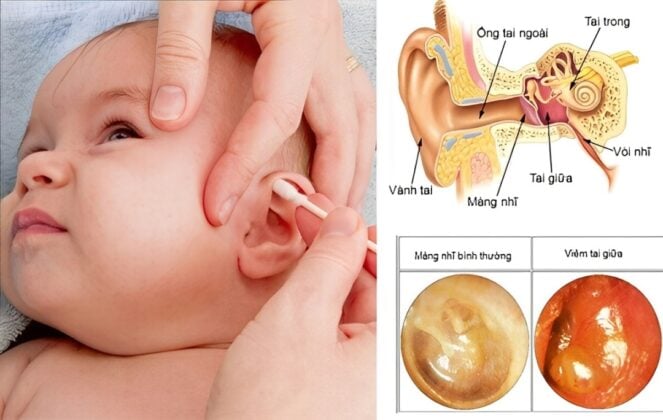
- Ear rubbing, ear pulling, or head tilting to one side
- Ear discharge or pus (if the eardrum has ruptured)
- Reduced hearing or poor response to soft sounds
- In older children: ear pain, ringing in the ear, or difficulty hearing
If these signs appear, parents should take their child to an ENT specialist for an ear examination. Using ear drops or antibiotics without medical advice may mask symptoms and increase the risk of chronic infection or permanent eardrum damage.
3. Do all cases require antibiotics?
Not every case requires antibiotics immediately. For children over 2 years old with mild symptoms and no high fever, doctors may recommend monitoring the conditions for 2–3 days before prescribing medication. However, for children under 2 years old, or those with high fever, severe pain, or infections affecting both ears, early antibiotic treatment is often necessary.
Treatment is not just about antibiotics. Keeping the nose clean and maintaining clear upper airways are equally important. Many parents stop medication after 5–7 days once the fever improve and nasal discharge decreases, without follow-up visits or continued nasal care. This may lead to early recurrence of the infection and can negatively impact both the child’s overall health and hearing.
4. Can middle ear infections be serious?
Most children recover completely with proper treatment. However, recurrent or untreated infections may lead to complications such as:
- Temporary or permanent hearing loss
- Speech delay and language development issues
- Eardrum perforation, mastoiditis
- In rare cases, meningitis
If a child experiences three or more middle ear infections within six months, or if fluid remains in the middle ear for more than three months, doctors may recommend ventilation tubes (grommets) to improve drainage, support hearing, and reduce recurrence.
5. Six effective ways to prevent middle ear infections
| Prevention Method | Explanation | |
|---|---|---|
| 1 | Breastfeed exclusively for at least the first 6 months | Breast milk strengthens immunity and reduces the risk of middle ear infections by up to 50%. |
| 2 | Avoid exposure to cigarette smoke and indoor air pollution | Smoke can block the Eustachian tube and increase the risk of infection. |
| 3 | Avoid bottle-feeding while the child is lying down | Lying position increases the risk of milk flowing into the middle ear. |
| 4 | Ensure complete vaccination schedule | Influenza and pneumococcal (PCV) vaccines significantly reduce the incidence of middle ear infections. |
| 5 | Reduce the spread of respiratory infections at school | Respiratory infections can spread through unwashed hands, coughing, and contaminated shared toys among children. |
| 6 | Monitor closely after prolonged upper respiratory infections | These infections are the most common underlying cause of middle ear infections. |