[Wellbeing Initiatives 2025–2026] Emotional Wellbeing – When Students Take The Lead In Creating Positive Emotional Experiences
With more than 2,900 initiatives, accounting for over 40% of all ideas submitted in Season 2, emotional wellbeing has emerged as the area that Vinsers care about the most in Wellbeing Initiatives 2025–2026.
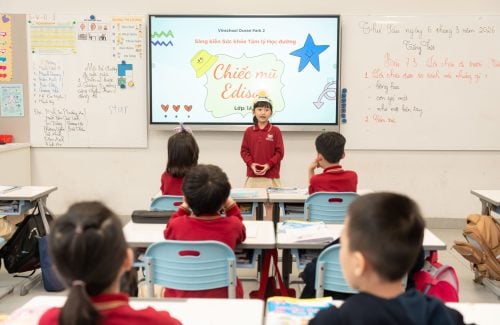
Moving beyond ideas, students are directly designing and implementing solutions to enhance emotional wellbeing in school life—from daily emotional check-in systems and workshops on emotional awareness, to safe spaces where students can listen, share, and support one another. Each initiative is a vivid demonstration of students’ ability to identify challenges, develop solutions, and actively shape their own experiences.
Through this initiative model, caring for emotional wellbeing is no longer something implemented solely through teacher-led requirements. Instead, it becomes a competency that students take ownership of—where they learn to understand and manage their emotions while creating positive change for the community around them.
Click on each image below to discover these “made by Vinsers” initiatives and see how students are actively shaping a more positive school environment through their own experiences.
—
In the 2024–2025 academic year, Vinschool first launched the School Mental Health Wellbeing Initiatives program under the theme “Wellbeing for Better Learning.” The program not only raises awareness but also encourages concrete actions to support mental wellbeing in schools.
In its first season alone, more than 5,500 initiatives were registered, 2,622 were implemented in practice, and nearly 21,000 students, teachers, and parents participated, helping spread the value of mental wellbeing across the entire Vinschool system.
With the Wellbeing Initiatives program, Vinschool was honored in the “Nurturing Wellbeing & Purpose” category at the QS Reimagine Education Awards 2025—a prestigious international award often referred to as the “Oscars of global education,” founded by QS Quacquarelli Symonds, one of the world’s leading higher education ranking organizations.
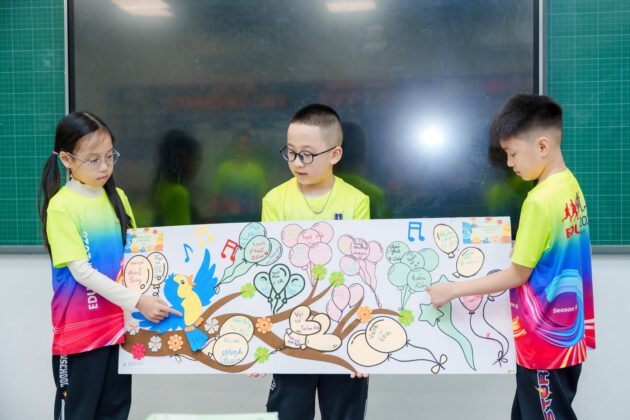
This initiative was inspired by a personal experience when a student realized that they often had many emotions but didn’t know who to share them with. Seeing that many classmates felt the same way, the student wanted to create a way for everyone to recognize and express their feelings.
As a result, the student designed a poster filled with many “bubbles,” each representing a different emotion. Students choose the bubble that reflects how they feel, keeping joyful emotions while letting go of sadness or worry. Through this simple activity, they learn to name and process their emotions.
The activity helps the whole class understand and share feelings with one another, creating a more joyful and connected atmosphere. Vinser Mac Minh Sang shared: “This activity helped our class feel closer, and no one has to keep their feelings to themselves anymore.”
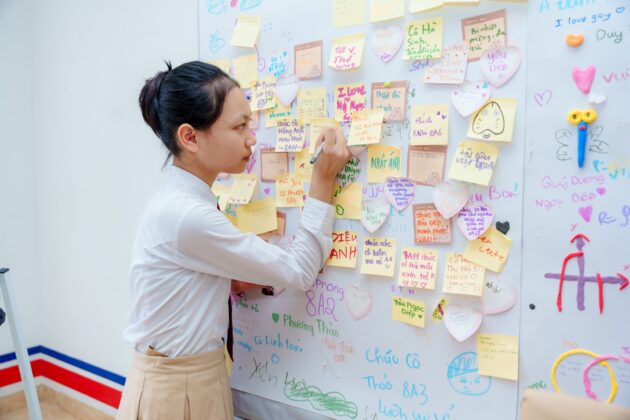
This initiative was formed from the observation that many students struggle to name their emotions and often tend to suppress psychological discomfort. The student team therefore designed an experiential journey with three interactive stations to help participants gradually recognize, face, and transform their emotions.
During the journey, students write down their feelings and place them into small glass jars. They also write letters to themselves, setting a reminder to revisit their emotions one week later. The team even developed a student-coded mini app to remind participants to return to their “emotional appointment.”
On the very first day of launch, the initiative attracted over 200 students. The “Heart Box” filled with small jars became a symbol of the strong need to be heard and understood, while encouraging students to develop healthy habits for emotional wellbeing.
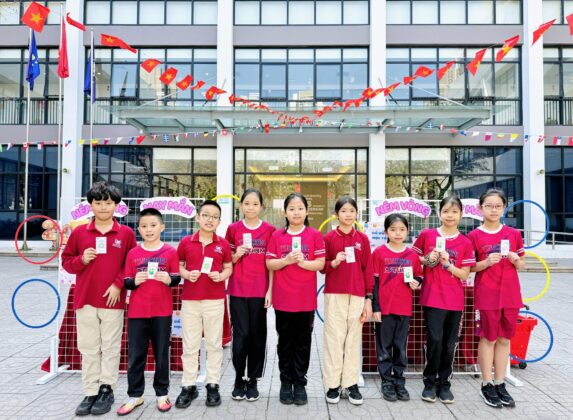
Recognizing that many students feel pressure and stress as exams approach due to heavy workloads and expectations, members of the Heart to Heart Psychology Club launched the initiative “No Stress – Just Success.” The goal was to encourage their peers to approach exam season with a lighter and more confident mindset.
The team organized a series of “exam support” activities in the school’s main hall during morning arrival time or breaks. Activities included distributing positive message cards, setting up a “Vuot Vu Mon” check-in corner (symbolizing overcoming academic challenges), and guiding students through quick breathing exercises to relax before class or exams.
Beyond helping reduce exam pressure, the initiative also spreads positive energy throughout the school community.
Vinser Minh Nguyet shared: “Holding the ‘Just Success’ card in my hand made the exam feel less like a ‘monster’ and more like a step I know I can overcome.”
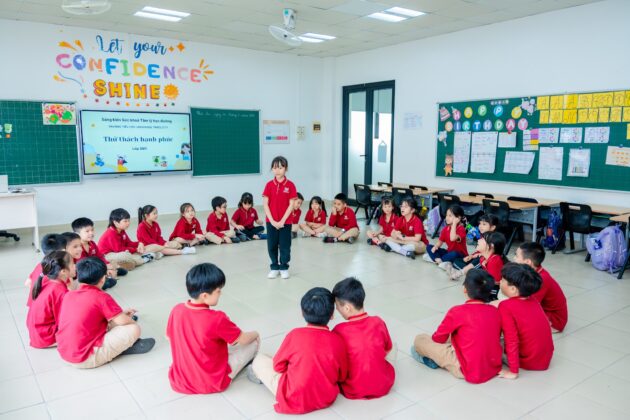
This initiative was inspired by the belief that happiness is not something that happens by chance but something that can be nurtured through positive daily habits. From this idea, Vinsers proposed a series of small challenges that encourage students to practice acts of kindness in everyday school life.
Each week, the whole class participates in a simple “happiness challenge”, such as saying thank you, helping a friend in need, complimenting someone, or apologizing sincerely after making a mistake. At the end of the week, students share their stories and reflections from completing the challenge.
Over time, these seemingly small actions gradually become positive habits in daily life. The activity helps students realize that happiness can be built through simple gestures of care, understanding, and sharing.
Vinser Nguyen Lam Giang shared: “The Happiness Challenge helped us understand the journey of accumulating love every day. We realized that happiness comes from care, understanding, gratitude, and empathy for friends and people around us. I will always remember my friends’ smiles when someone apologized sincerely, or the warm hugs when we truly understood one another.”
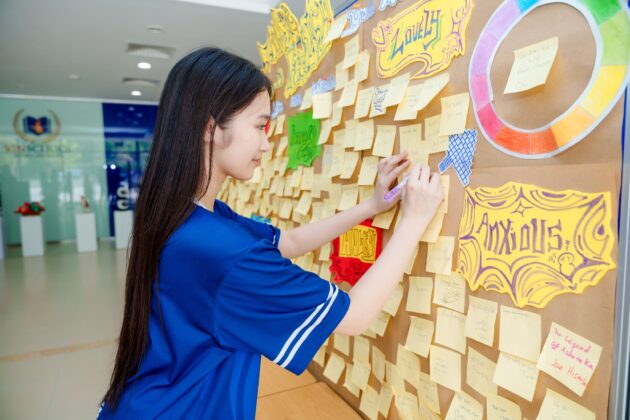
This initiative was developed from the understanding that music has a special connection with emotions. Through familiar melodies, students can share their moods and connect with friends in a natural and relatable way.
The activity is implemented through a music emotion board, where students write down the names of songs, pieces of music, or artists they love and place them in the section that matches their current feelings. Over time, the board becomes a space where students exchange musical tastes and find friends who share the same vibe.
As soon as it was introduced, the board quickly filled with diverse melodies. Each song shared is not just a musical choice but also an emotional story that helps students express themselves and discover resonance with others.
Vinser Nguyen Phuong Anh shared: “The sound emotion board makes me feel more joyful. Whenever I find a song that matches my vibe, I can sway to the music and sing along without feeling shy, because my friends join in with me.”
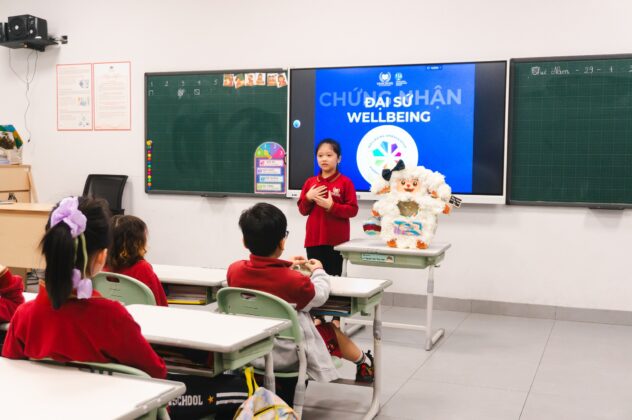
This initiative began when students noticed that many of their friends seemed unhappy but felt shy about sharing their feelings. They wanted to create a safe place where students could send away their sadness without having to say it out loud, allowing their emotions to be acknowledged and understood.
In the classroom, students created the “Bami the Sheep Corner” – a space where classmates write down their worries and place them into Bami’s belly. In return, they receive a “candy of joy” containing positive messages such as “You are amazing!” or “Everything will be okay!”, offering a gentle emotional experience.
The activity encourages students to gradually express their emotions instead of keeping them inside. Sending their sadness to Bami the Sheep helps them feel lighter and happier while spreading positive energy throughout the class. Vinser Nguyen Kha Han shared: “I realized that I don’t have to keep everything to myself anymore, and I hope my friends will also feel brave enough to share their emotions.”
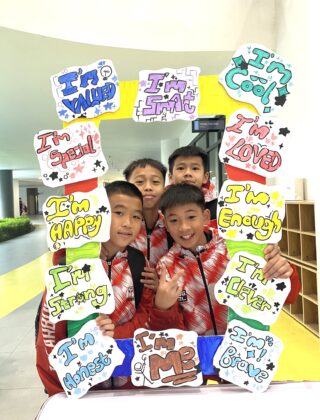
This initiative started from the interesting discovery that the word “stressed” becomes “desserts” when reversed, conveying the message that stress is not a barrier but can become a “sweet ingredient” in the journey of growth. The student team hopes to help their peers recognize their self-worth and transform pressure into positive motivation.
From this idea, a “Dessert Corner” was created with vibrant visuals and small tips for stress relief such as deep breathing, movement, or writing down things to be grateful for. A photobooth with positive messages and “soul candies” offers students a chance to experience, capture, and share positive energy.
The activity quickly attracted over 600 Vinsers, creating a lively atmosphere throughout the school. The initiative encourages students to view pressure from a more positive perspective while spreading uplifting energy through inspiring photos and hashtags.
Vinser Phan Bao Linh shared: “I never thought reversing a word could completely change my perspective on stress. It turns out that with the right attitude, exams can feel as sweet and manageable as a piece of cake.”
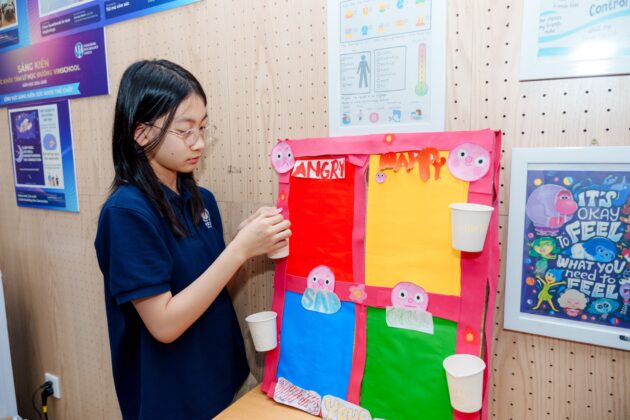
This initiative was designed for Grade 6 students, who often face many new experiences and uncertainties when transitioning to middle school. The student team chose the familiar cartoon character Peppa Pig to make it easier and more relatable for students to identify four basic emotions: happiness, sadness, anger, and fear.
The activity uses an emotion board placed in the classroom and divided into four sections representing these emotional states. Each morning, students select a Peppa image that reflects their mood and place it on the board as an “emotional check-in” before starting the school day.
The initiative quickly received strong engagement, with 100% of Grade 6 students participating daily. The board also helps teachers identify and support students who may feel sad or upset, encouraging the early development of emotional awareness and mental wellbeing.

This initiative draws inspiration from the metaphor that every emotion is like a “box” waiting to be opened and understood. The student team wanted to create a safe space where Vinsers can recognize, name, and share their feelings, fostering empathy within the community and supporting younger students with special needs.
The activity began in classrooms and expanded across the school, where students write or draw their emotions and place them into the “Emotion Box” so that teachers and friends can accompany them. The initiative also reached the wider community through games, music, and physical activities at a Social Work and Early Intervention Center, helping autistic children recognize and express their emotions.
Across classrooms, grade levels, and the entire school, the initiative has helped Vinsers strengthen their emotional awareness and regulation, while learning to care for and understand the people around them—contributing to a psychologically safe school environment.
Vinser Nguyen Bao An shared: “I felt very happy participating in activities with autistic children at the Center. I realized that many of them struggle to express their emotions. I hope I will have the chance to return and continue supporting them so they can better recognize and understand their feelings.”