[GCED] From inquiry to impact: How the Five Perspectives guide students through global affairs
The Five Perspectives provide a structured approach for building a comprehensive understanding of global issues. With this comes empathy, respect for diversity, and a clearer sense of their own capacity to contribute. This empowers students to propose ideas proactively, take initiative, and act responsibly.
About 70% of the Earth’s surface is covered by water, yet many regions still face severe water scarcity. Why does this paradox exist? And how severe is the situation?
At Vinschool, questions like these spark meaningful inquiry in Global Citizenship Education (GCED). Instead of simply observing, pupils actively investigate real-world challenges. From curious questions, our Grade 2 students began exploring why even advanced nations struggle to ensure universal access to clean water, how overextraction in one area can disrupt ecosystems elsewhere, and which long-term solutions might create sustainable change. These early inquiries open the door to a full and nuanced understanding of the ‘Clean Water’ theme.
‘Clean Water’ is one of the core strands in GCED, where pupils examine global challenges through the five key perspectives that define a global citizen: Global Thinking, Systems Thinking, Critical Thinking, Innovation & Creativity, and Collaboration. These lenses guide pupils to look beyond surface-level facts, uncover root causes, evaluate different viewpoints, imagine new solutions, and work together toward shared goals.
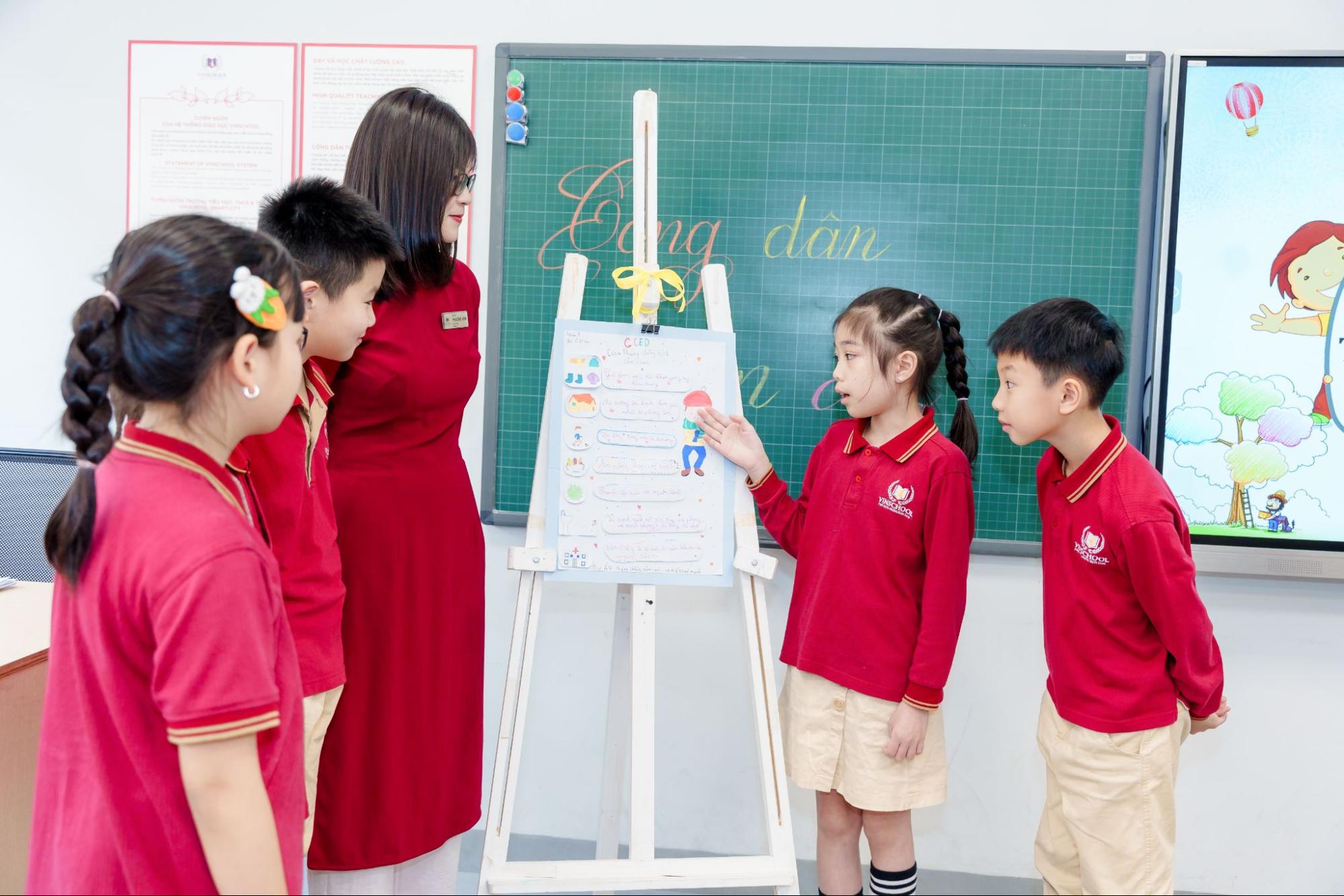
Grade 3 students explore ‘Health and Wellbeing’, one of the core themes explored in GCED.
As one of Vinschool’s three unique subjects, Global Citizenship Education equips students with the knowledge, skills, and qualities essential for contributing to a more equitable, peaceful, and better world. By engaging with global themes in thoughtful and age-appropriate ways, students learn to connect their local experiences to worldwide challenges, recognise the interdependence of communities, and develop the mindset and capabilities of responsible global citizens.
The Five Perspectives: An essential framework to understand global issues
The Five Perspectives are five distinct lenses that help students explore an issue in depth, enabling them to form a well-rounded and insightful understanding of it.
Global Thinking helps students see that global challenges are interconnected and often deepen existing inequalities. They come to understand that the same issue can impact people in vastly different ways, depending on where they live and the conditions they face.
Systems Thinking encourages students to look beyond immediate symptoms by identifying root causes, analysing how different factors influence one another, and recognising that lasting solutions must address the system as a whole rather than offer quick fixes.
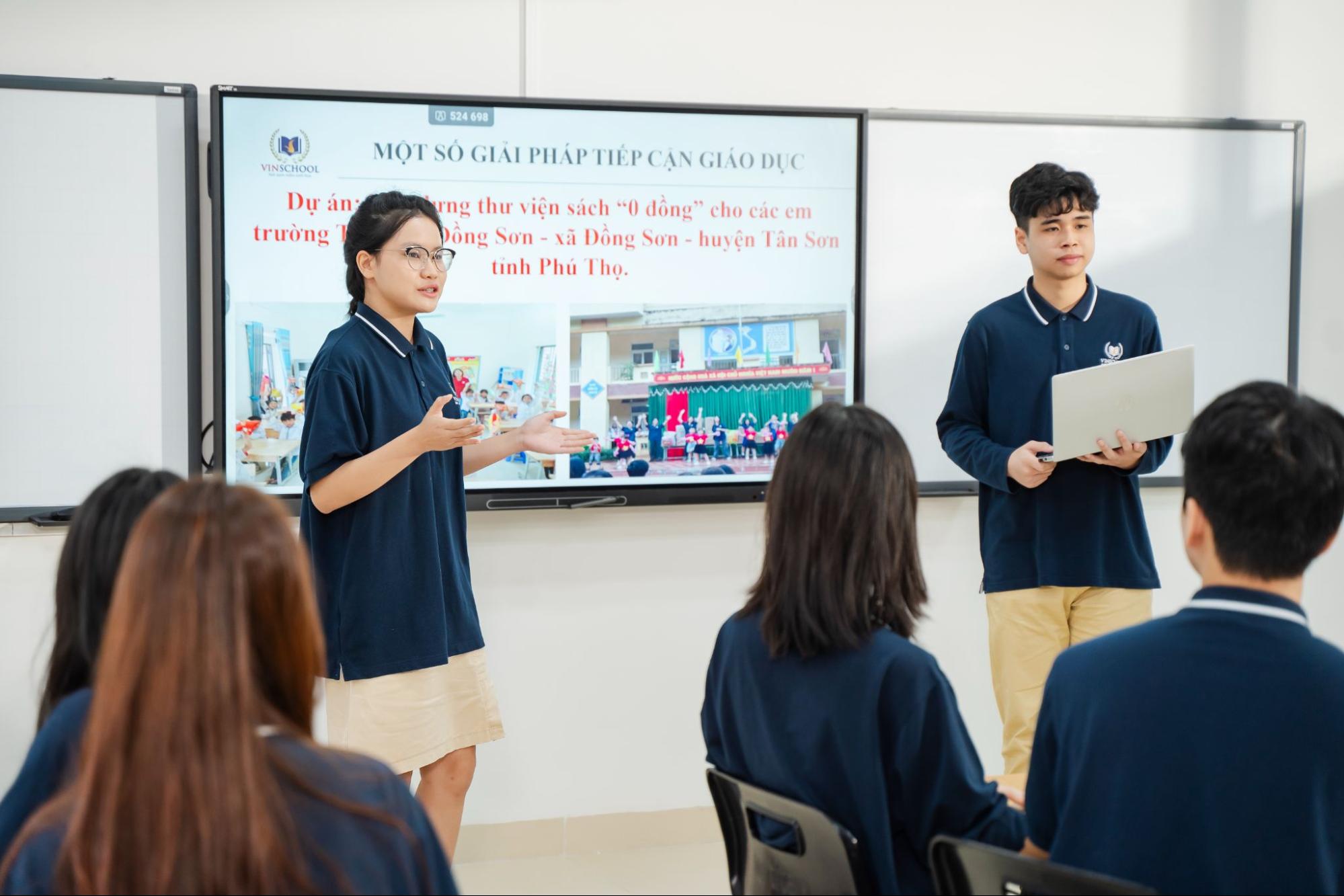
Vinsers propose some solutions to help expand children’s access to education.
Through Critical Thinking, students examine multiple viewpoints, identify bias, and consider how information is framed. This perspective strengthens their ability to question assumptions and make informed judgments. Creative & Innovative Thinking provides students with a structured approach to finding solutions – from generating ideas to anticipating obstacles. They learn that innovation does not always require creating something entirely new; it can begin with rethinking and refining what already exists to make it more effective.
Finally, Collaborative Thinking highlights that no global issue can be solved alone. Students learn to mobilise partners, identify networks, engage communities, and draw lessons from real-world examples of collective action. This perspective reinforces the idea that meaningful change is built through shared effort and cooperation.
Nurturing global mindset and responsibilities
Developed by Vinschool with reference to UNESCO’s learning objectives for Global Citizenship Education, the Five Perspectives provide a structured approach for building a comprehensive understanding of global issues. With this comes empathy, respect for diversity, and a clearer sense of their own capacity to contribute. This empowers students to propose ideas proactively, take initiative, and act responsibly.
By applying this framework across all grade levels, Vinschool equips students with the ability to examine both local and global issues thoughtfully and holistically. They learn to avoid common misconceptions, recognise complexity, and appreciate the value of long-term, sustainable solutions.
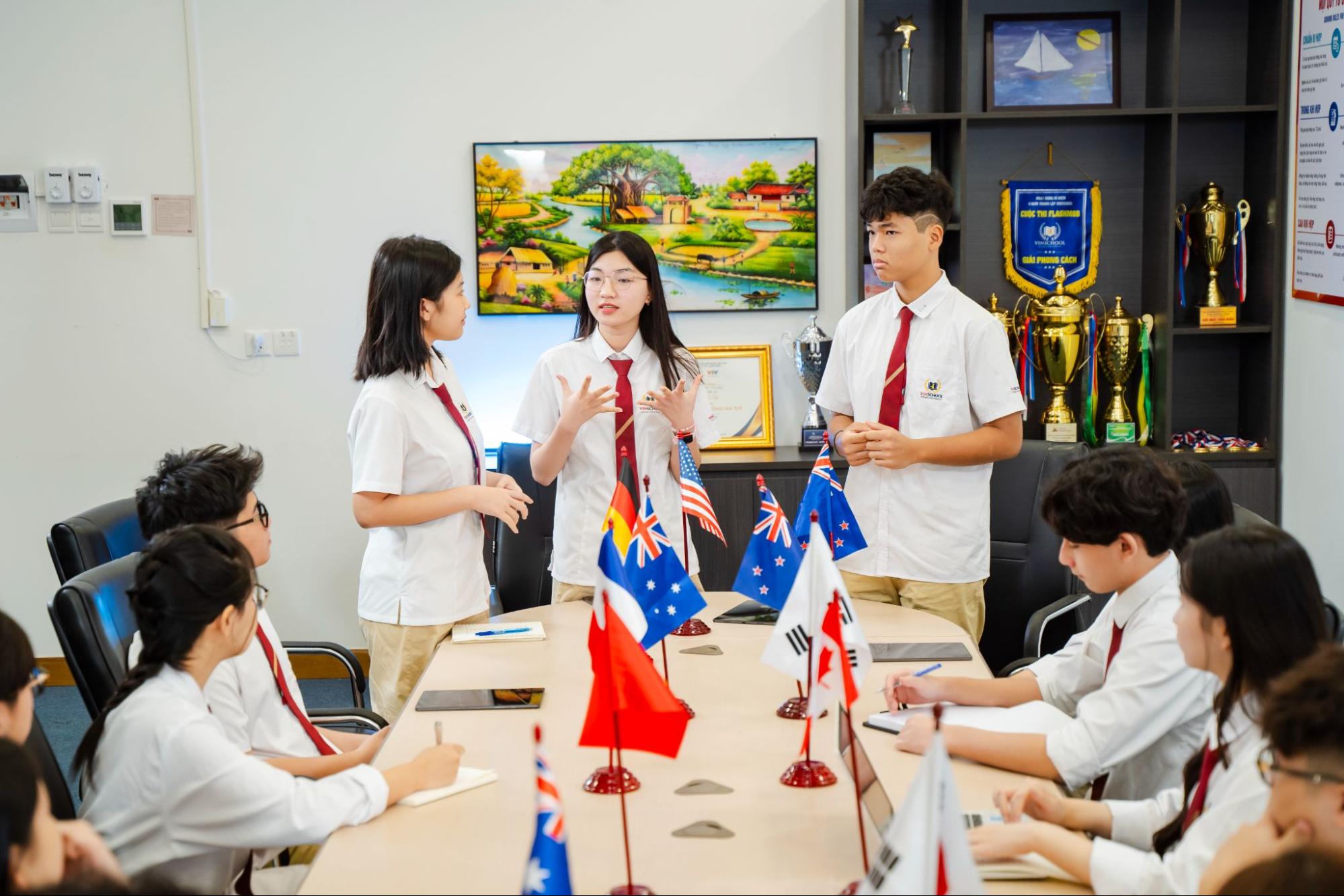
Understanding of global issues is crucial in preparing young people for an increasingly interconnected world.
The Five Perspectives are integrated into all core themes at GCED – such as climate change, gender equality, sustainable development and peace – to help students develop a comprehensive understanding of global issues from multiple angles.
Developed from the principles of global citizenship of CIS and the GCED models of Oxfam and UNESCO, Vinschool’s GCED program equips students with knowledge, skills, and values to navigate an interconnected world. Beyond understanding global issues, students develop critical thinking, creativity, problem-solving, and effective communication. Through practical activities, social projects, and cultural exchanges, they learn teamwork, empathy, and cross-cultural awareness, building confidence to express ideas, collaborate with others, and contribute responsibly to a fairer, more harmonious, and sustainable global community.
| Exploring the ‘Clean Water’ theme through the Five Perspectives
‘Clean Water’ is currently taught to Grade 2 students and is one of the 12 core themes of GCED at Vinschool. In the first lessons, through the Global Thinking lens, students learn what clean water is, why it is important, and how water scarcity affects communities around the world. They also connect these ideas to their own lives, reflecting on how a lack of clean water could impact themselves and their families. Through Systems Thinking, students explore the overlapping causes of water scarcity, including natural disasters, pollution, infrastructure challenges, and human behavior. They come to understand that addressing the issue requires tackling its root causes, rather than relying on short-term fixes. Using Critical Thinking lens, students identify and evaluate different perspectives on water issues, understanding that a single problem can generate multiple viewpoints. They recognize that while everyone needs access to clean water, certain behaviors – whether due to lack of knowledge, unawareness of impact, or personal interests – can affect others’ access. Through the Innovation & Creativity lens, students define the problem, select the groups affected, and learn how to plan, implement, and evaluate potential solutions. They understand that short-term measures, like donating bottled water, do not address the root causes and are often impractical for their age. Instead, they explore solutions that are both meaningful for the community and feasible for their abilities. Finally, the Collaboration lens helps students see that no one can solve global challenges alone. They examine examples of cooperative efforts to tackle water scarcity, learn lessons from these initiatives, and explore simple ways to engage others in collective action. They also observe collaboration in their own communities, such as following school rules for water conservation or ensuring local lakes stay clean, demonstrating that teamwork and shared responsibility are essential to creating sustainable change. |