Discovering: How children at 3-4 years old learn English in Story Time Lessons
For Kindergarten children, learning English through Story Time lessons is a way to learn a language and a delightful journey of exploration. At ages 3 – 4 years old, children are curious, like to explore new things, and are especially drawn to vivid, colorful stories. Thus, Story Time in English class is an activity that allows children to learn and play simultaneously.

Why is Story Time Important in Learning English?
- Enhancing Vocabulary and Pronunciation: Simple English stories with familiar words and phrases help children quickly absorb new vocabulary. Listening to characters with clear, lively pronunciation also allows children to gradually grasp accurate pronunciation.
- Encouraging Creative Thinking: Children have rich imaginations, and each story they hear helps develop that creativity. Every story is a new world they can enter, encouraging them to think creatively and fostering curiosity about the world around them.
- Building Emotional Intelligence: Stories not only provide vocabulary but also incorporate lessons about friendship, sharing, and kindness. Through stories, children learn empathy and recognize different emotions.

Learning through Experience – Developing Comprehensive Skills
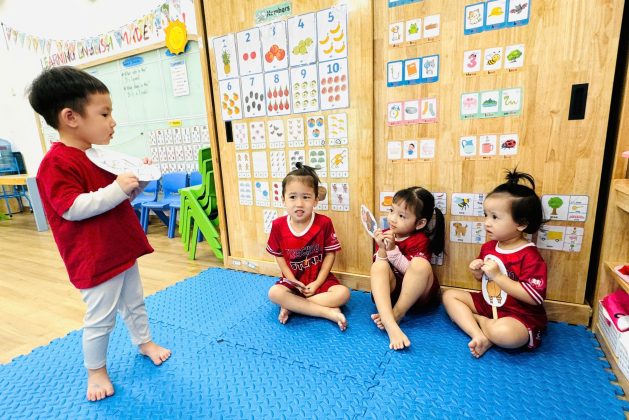
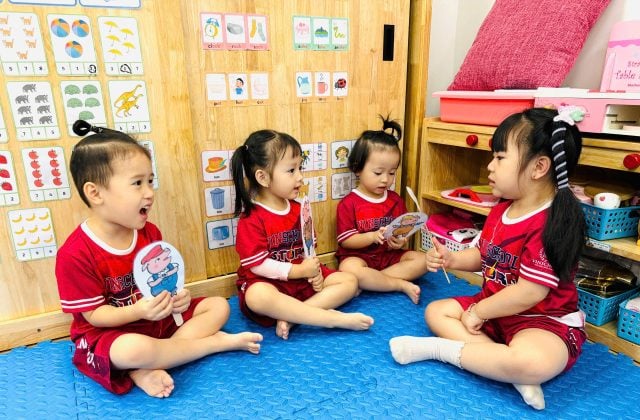
During the Storytime lessons in classes for 3-4-year-olds, after listening to the teacher read or tell the story, children participate in various activities such as “Sequence,” “Meeting with Characters,” “Role Play,” or “Quiz Games.”. These activities help children remember the story content and draw out the meaning of the story.
These activities not only strengthen listening comprehension skills but also build confidence, enhance logical thinking in language development, and promote teamwork, helping to shape essential social skills.


Learning with Suitable Support from Teachers
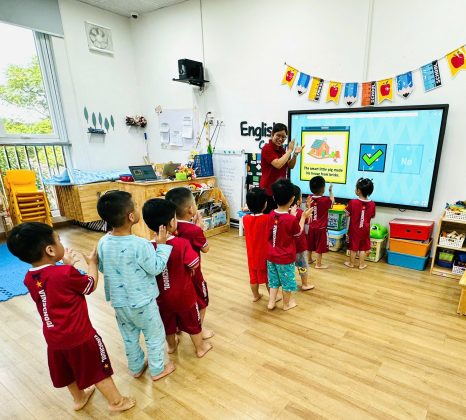
Children participate in reading activities under the guidance and encouragement of teachers, which helps them naturally grasp knowledge and develop skills.
Moreover, children can choose to work in pairs or groups, or depending on their abilities and preferences. This approach not only helps children feel comfortable but also encourages creativity and confidence in expressing their opinions. Every child has the opportunity to learn in their own way, creating a friendly and positive learning environment.