Personalised Pathways – When Education Becomes a Journey of Creation
When each student is recognised as a unique individual — with their own strengths, passions, and pace of development — education is no longer merely a process of receiving knowledge, but a journey of creation.
At Vinschool Times City, the principle of the Personalized Learning Pathway is brought to life through the P.A.P.E.R Club (Promoting Academic Passion & Excellence in Research) — a pioneering academic environment that nurtures talent through personalized pathways and deep learning from the Primary years.
An Academic Ecosystem Designed to Nurture Talent
P.A.P.E.R Club was established as an advanced academic space for students who demonstrate exceptional potential at an early stage. The selection process focuses on understanding each learner from multiple dimensions: how they perceive themselves, pursue their interests, and approach challenges. Based on this holistic understanding, every student is guided to develop an Academic Learning Pathway (ALP) with clear goals and long-term direction.
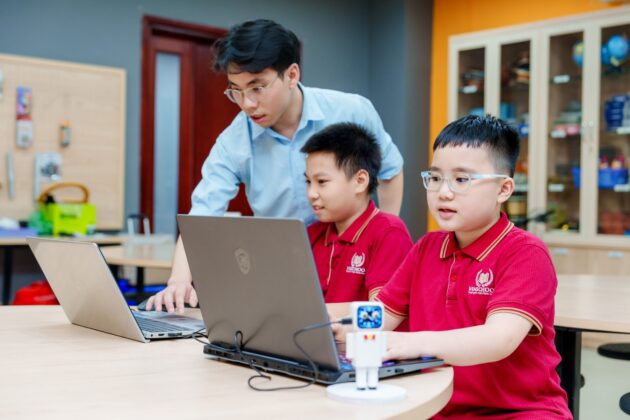
Throughout the journey, students do not learn simply by being taught. Instead, they learn through authentic research experiences: generating ideas, developing projects, reflecting on outcomes, and continuously refining their work. Teachers act as mentors and facilitators, while the emphasis is placed on students’ self-directed learning and ownership of knowledge.
Deep Learning – When Knowledge Becomes Capability
Rather than approaching knowledge as isolated units of information, students are guided to become deep learners — individuals who can investigate issues in depth, connect ideas across disciplines, and create value from their understanding.
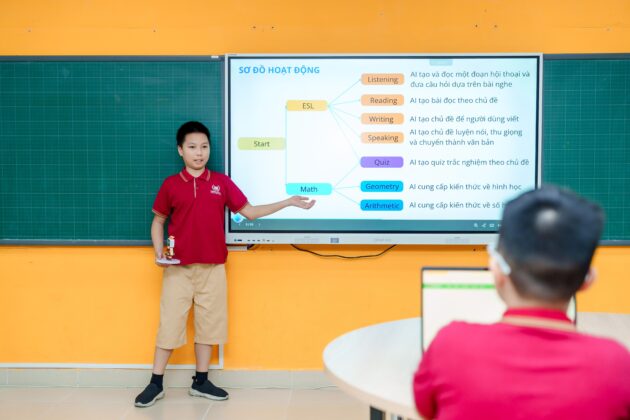
Learning takes place through multiple cycles of experimentation, where mistakes become valuable data for improvement. Over time, students develop critical thinking, problem-solving skills, and a systematic approach to knowledge.
This is the foundation of a deep learner: someone who can continue developing knowledge independently.
From Ideas to Functional Products
One of the clearest examples is the MEAL project (Math & English Assistant Learning), developed by two Grade 5 students.
Inspired by a highly practical challenge — the barriers many learners face in studying Mathematics and English — the students gradually built an interactive learning assistant capable of voice communication. From coding and data processing to language integration, each stage became an authentic learning process in which knowledge was transformed into practical solutions.
The product was tested, refined, and improved directly in the classroom environment, with fellow students serving as real users.
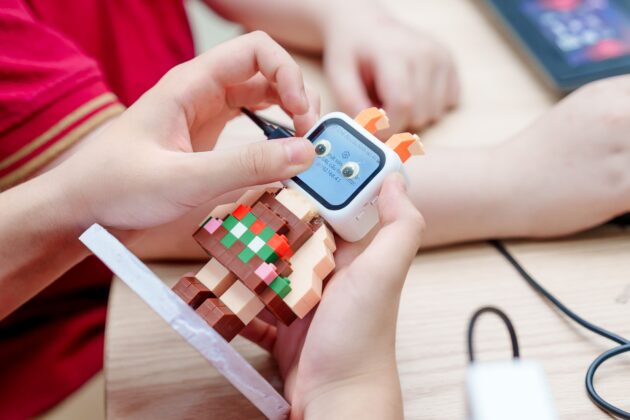
Through this journey, visible changes emerged in how the students approached learning: they became more proactive in setting goals, maintaining discipline, and persevering until project completion. Their families also observed these developments through the students’ growing ability to organise their learning independently and remain committed to the goals they had chosen.
Alongside technology-based projects, students are also encouraged to explore academic learning through creative formats.
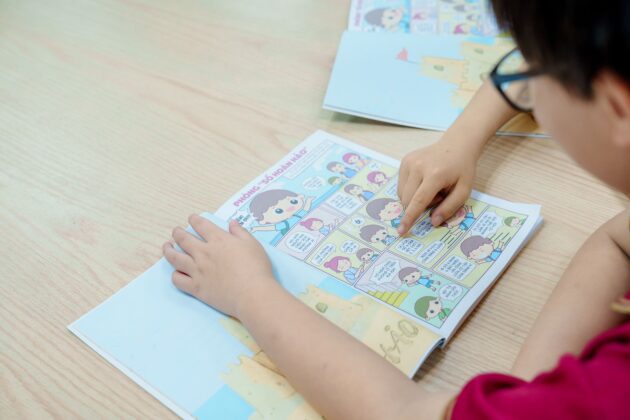
The book project The Adventures of Tom and Timmy is a strong example, where mathematical concepts were transformed into storytelling, making knowledge more relatable and accessible. Here, logic, language, and the arts are not separated, but integrated into one meaningful learning experience.
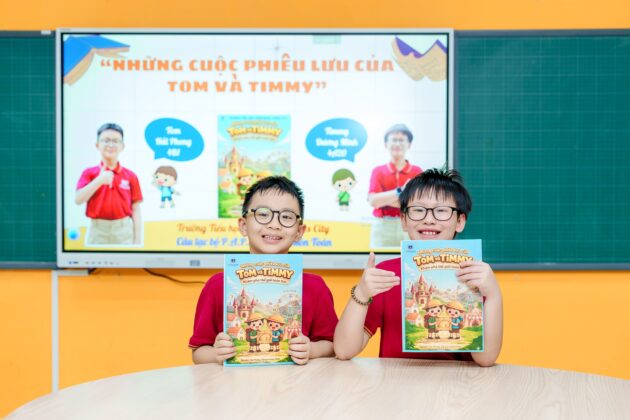
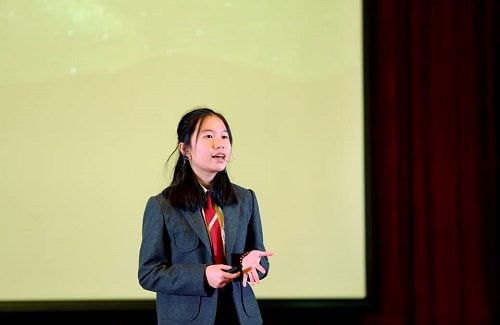
Students confidently presenting their projects before professional panels and bringing their products into real-life contexts reflects an important transformation: from learners, they become creators.
Long-Term Developmental Direction
The value of this model lies in how students develop sustainable learning methods and long-term approaches to knowledge.
When development pathways are personalised and guided effectively, students gradually build self-learning capacity, the ability to make choices, and the perseverance to pursue long-term goals. Learning becomes intentional, rather than merely reactive to external demands.
From these early academic experiences, students progressively develop independent thinking, self-directed learning habits, and personal direction — capabilities that are essential in a constantly changing world. This forms the foundation for lifelong learning and enables students to engage proactively in broader knowledge ecosystems in the future.
![[HN & TP.HCM] GATE CENTER OFFICIALLY LAUNCHES THE TALENTED STUDENTS SELECTION PROGRAM – FUTURE INNOVATORS 2026](https://vinschool.edu.vn/wp-content/uploads/2026/01/07/Anh-bia-06-500x325.jpg)