GCED – Nurturing global citizens from primary school
In an increasingly interconnected world, equipping students with a global mindset, social responsibility, and the skills to take meaningful action on real-world challenges is not just an option - it is an essential requirement.
The Global Citizenship Education (GCED) program at Vinschool is built upon the 17 United Nations Sustainable Development Goals (SDGs) and the global citizenship framework of the Council of International Schools (CIS). This program provides students with opportunities to explore and contribute to solving global challenges such as climate change, social inequality, lack of access to education, and poverty.
GCED not only imparts knowledge but also enables students to apply their learning in real-world contexts through action-based projects. This approach nurtures critical thinking, responsibility, and problem-solving skills, empowering students to create meaningful changes in their communities.
Building global citizenship competencies from an early age
From primary school, Vinschool students are introduced to global issues such as clean water shortages, physical and mental health challenges, and biodiversity loss, all presented in an age-appropriate manner. Students are encouraged to observe and explore these issues from personal, community, and societal perspectives, fostering a sense of responsibility toward the world.
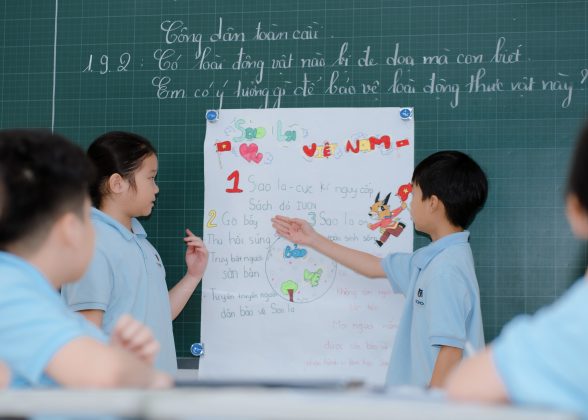

In addition, GCED focuses on developing critical thinking, teamwork, and creativity, equipping students with skills necessary to tackle more complex issues like poverty and climate change as they progress to secondary school.
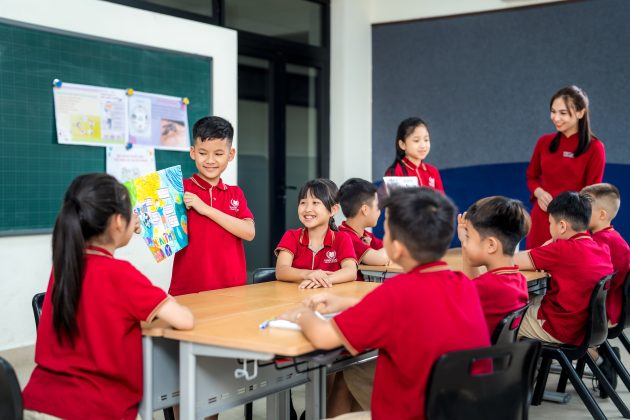
An interdisciplinary approach – Phenomenon-based learning
GCED employs Phenomenon-based learning, allowing students to explore issues not through isolated subjects but through an integrated, interdisciplinary approach.
For example, when studying water pollution, students analyze the issue through multiple perspectives:
- Biology: The impact on ecosystems and human health
- Economics: The effect of water pollution on certain industries and local economies
- Law: Environmental protection policies and the responsibilities of individuals and organizations
- Technology: Solutions for purifying polluted water into drinkable water
By connecting knowledge from different fields, students gain a deeper understanding of issues and learn how to apply their knowledge in real-world contexts. This approach strengthens their critical thinking and decision-making skills.
From awareness to action – Service-learning
A key highlight of GCED at Vinschool is the Service-learning model, which enables students to not only acquire knowledge but also participate in meaningful real-world activities that benefit the community.
For instance, after learning about water pollution, students might:
- Launch a campaign to raise awareness about water conservation at school.
- Propose simple water filtration solutions for areas with limited access to clean water.
- Educate the community on ways to protect water sources.
Through service-learning, students experience the impact of their contributions, fostering a strong sense of responsibility in driving positive change.
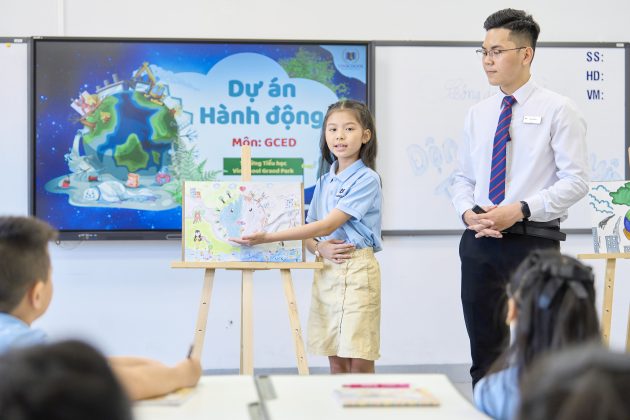
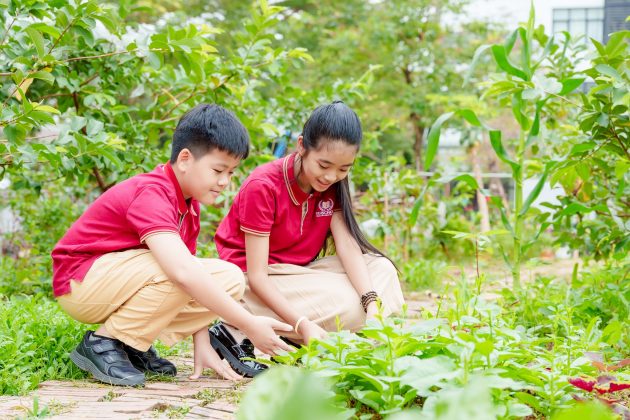
Students take ownership of their learning journey
At Vinschool, students are empowered to plan and implement projects based on their interests. With guidance from teachers, they:
- Identify issues that need to be addressed
- Research causes, impacts, and possible solutions
- Develop a plan for implementing solutions
- Execute the plan and assess its effectiveness
For example, if students recognize school bullying as a significant issue, they can initiate a project to promote respect for diversity and create a safe, inclusive school environment.
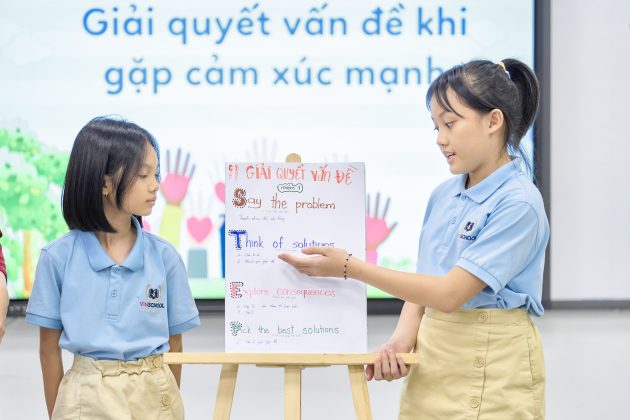
With GCED, Vinschool students don’t just learn to know – they learn to do, to act, and to become responsible global citizens ready to contribute to sustainable societal development.