Exploring the world of solids and liquids – Third graders develop scientific thinking with the 5E model
Wednesday, 27/11/2024, 15:11 (GMT+7)
In a Cambridge Science lesson on solids and liquids, Vinschool’s third-grade students embarked on an exciting journey of discovery - from initial assumptions about sand being a liquid to uncovering its true nature.
The lesson applied the 5E instructional model (Engage, Explore, Explain, Elaborate, Evaluate), guiding students toward a deeper understanding of the world through hands-on experiences and critical thinking.
Engage: The lesson began with thought-provoking questions such as, “Is sand a solid or a liquid? Why?” Initially, many students quickly assumed sand resembled a liquid because it could “flow” between their fingers and change shape when poured into different containers. This initial curiosity laid the groundwork for self-guided exploration. Although their early assumptions were not entirely accurate, they played a crucial role in fostering scientific inquiry.
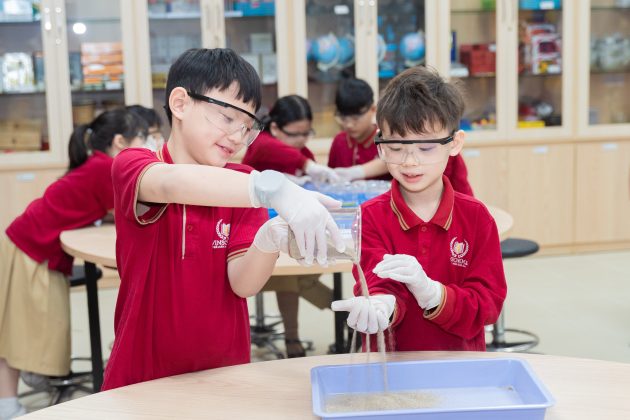
Initial prediction: Sand is like a liquid because it can flow through fingers
Explore:
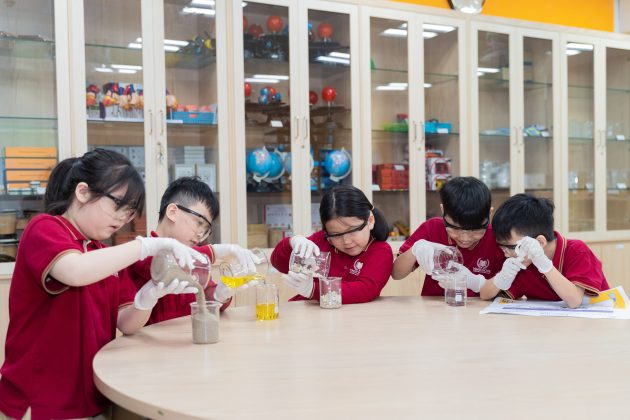
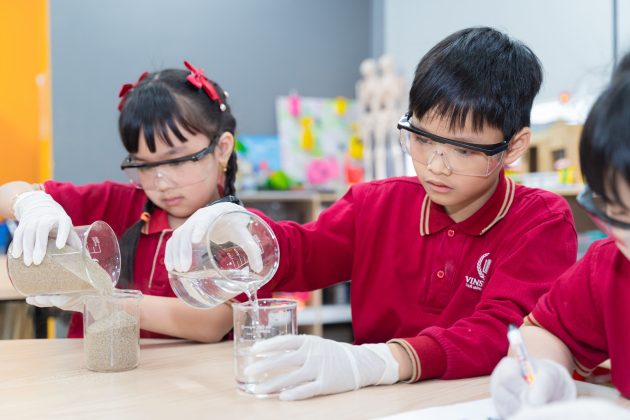
In small groups, students conducted experiments using sand, water, oil, and pebbles. They observed that while sand “flows” when poured between containers, each grain retains its shape, unlike water and oil, which seamlessly change shape to fill the containers completely. This hands-on activity encouraged students to begin distinguishing between sand and liquids based on their core properties, setting the stage for a deeper and more accurate understanding.
Students conducted experiments with sand, oil, pebbles, and water
Explain:
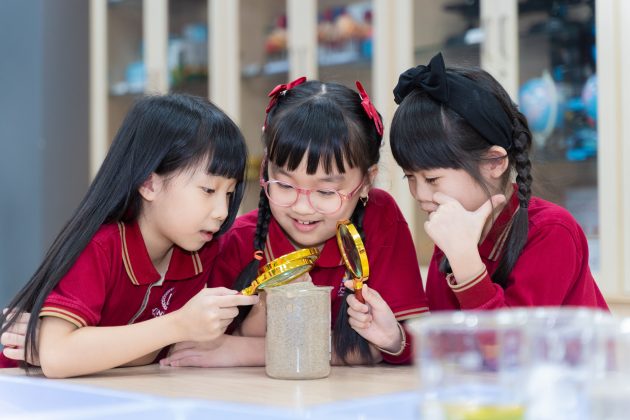
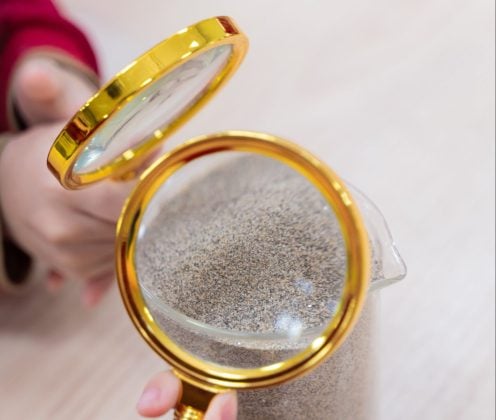
Through magnified observations and discussions with teachers and peers, students came to realize that sand, despite its “flowing” behavior, is made up of tiny solid particles. Each grain has a fixed shape and does not change form like water. Building on their initial assumptions, they developed a deeper comprehension of the differences between solids and liquids.
Students observed sand under magnifying glassesStudents realized that sand consists of small solid particles
Elaborate: To extend their understanding, students explored the concept of “flowing solids” by comparing sand with water. This reinforced the idea that sand belongs to the solid category despite sharing some “flowing” characteristics with liquids. This activity enabled students to overcome their initial assumptions and engage with more advanced scientific concepts.
Students investigated the concept of “flowing solids” by comparing sand and water
Evaluate: Finally, each student independently categorized materials as solids or liquids and provided brief explanations for their classifications. From initial confusion, they confidently articulated clear scientific reasoning about the properties of materials like sand.
Students classified materials into solids and liquids with clear explanations
In just 35 minutes, students not only acquired scientific knowledge but also honed their critical thinking and research skills. The 5E model took them on a transformative journey – from early assumptions to accurate understanding, building a solid foundation for future scientific exploration.