Explore – Experience – Act: Nurturing Young Vinsers’ Green Awareness on Earth Day
Wednesday, 22/04/2026, 16:04 (GMT+7)
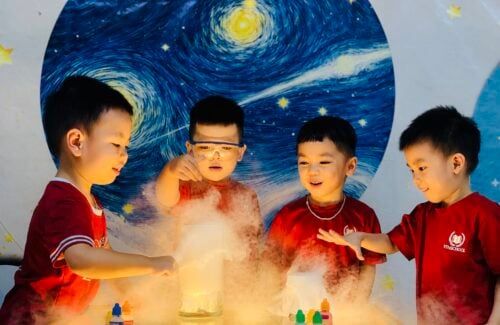
During Earth Day Week 2026, learning activities at Vinschool Kindergarten are designed around everyday, hands-on experiences such as planting, sorting waste, and observing changes in water and soil. Through direct participation, children are encouraged to touch, experiment, observe, and discover the connection between human actions and the environment around them.
Learning about the Earth, therefore, does not begin with abstract concepts. Instead, it gradually takes shape through concrete, age-appropriate experiences that reflect how young children perceive and understand the world in their early years.
From First Impressions: Children aged 12–24 months begin to explore nature
For toddlers, the journey begins with simple yet meaningful sensory experiences.
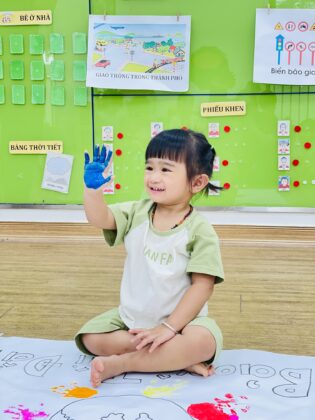
As children touch leaves, play with water, and observe the colors of flowers, they begin to form their first connections with the natural world. Through simple expressions such as “green leaves” and “cool water,” children gradually perceive nature as something familiar, comforting, and joyful—an important foundation for developing a love for nature in the years to come.
From Experience to Expression: Children aged 2–4 develop cognitively through environmental activities
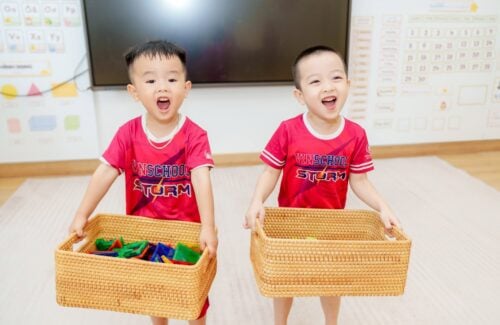
At the age of 2–4, children begin to engage in more purposeful activities, such as sorting waste, collecting “simulated waste” in the classroom, and observing and identifying environmentally friendly behaviors.
Through repeated actions and direct interaction, children gradually develop an early understanding of what is appropriate or inappropriate for the environment. They also begin to recognize that their own actions can have an impact on the world around them.
Children’s learning experiences are further enriched through creative activities.
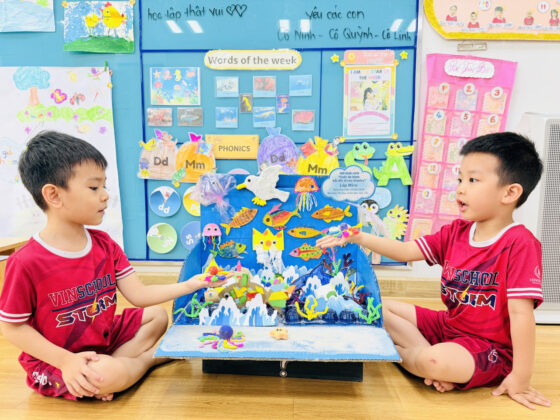
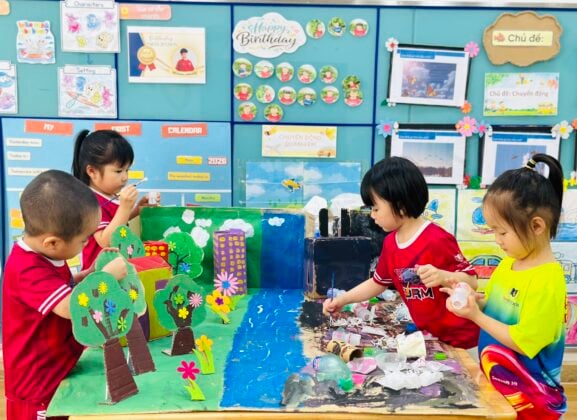
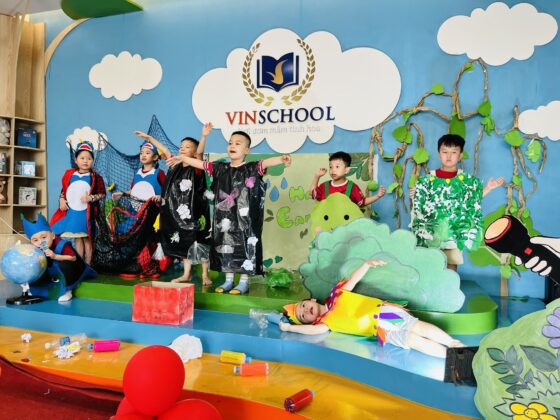
Using natural materials like leaves and flowers, as well as recycled materials, children create paintings, posters, or simple models to express their understanding of a “green Earth.” This process reflects an important developmental step, as children start connecting their observations with their own thoughts and ideas.
When children aged 4–6 express their thoughts and ideas
For older preschoolers, activities are designed to further develop thinking and expressive abilities.
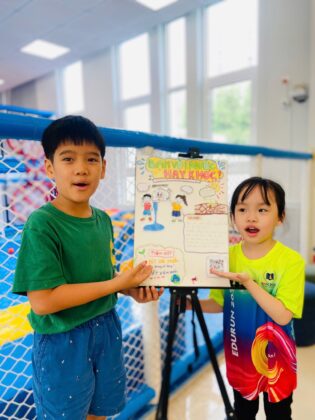
Children create posters, build campaign models, and confidently present their ideas to peers about what they can do to protect the environment. These experiences support the development of language, logical thinking, and confidence in expressing personal viewpoints. At the same time, children gain a clearer sense of their role, understanding that even small actions can contribute to protecting the environment.
Building responsibility through everyday actions
Alongside creative activities, children actively participate in familiar, hands-on tasks such as planting and caring for trees, observing the growth of seedlings, and keeping their classroom clean. Repeated engagement in these meaningful actions within a familiar environment helps children gradually form their understanding of the environment through personal experience.
As a result, their learning goes beyond memorization, growing into a sense of responsibility and positive habits—naturally nurtured from the earliest years of life.