Discovering the “Make 5” Concept with Our Little Vinsers
“Teacher, there’s 1 chick and 4 eggs. That makes 5 in the nest!” “2 chicks and 3 eggs still make 5!”
In an early numeracy lesson, our Vinsers aged 3 to 4 explored a “nest” made up of two groups: chicks and eggs. With gentle guidance from their teacher, the children answered simple questions:
- “How many chicks are there?”
- “How many eggs are there?”
- “How many are there in total?”
As they counted, compared, and shared their thinking, the children began to notice an important idea: even though the number of chicks and eggs changes, the total always stays the same – 5.
Exploring Part–Whole Relationships
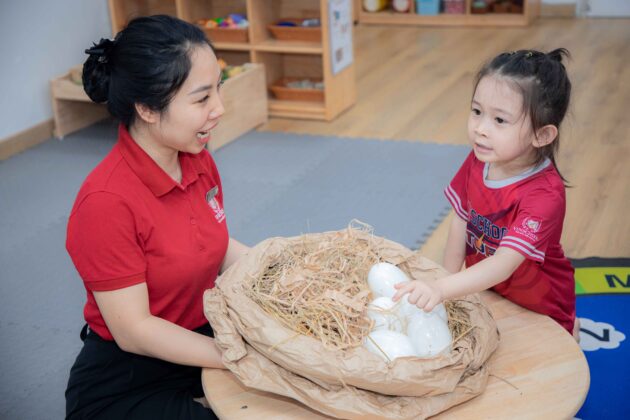
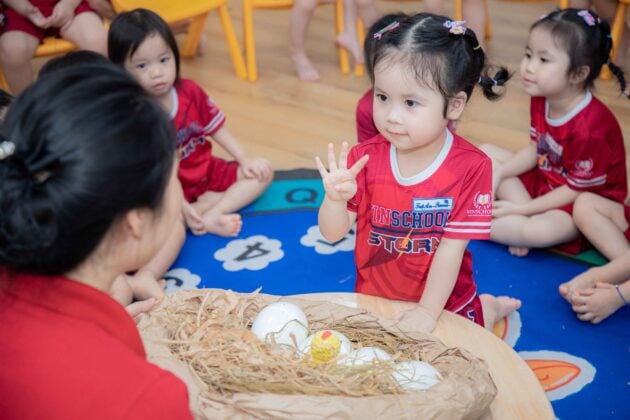
In each case, they returned to the same key questions: “How many chicks are there?”, “How many eggs are there?”, “How many are there in total?”. This purposeful repetition helped children understand that 5 can be made in different ways – an early introduction to part–whole relationships in mathematics.
Learning Through Movement – Turning Math into Real Experiences
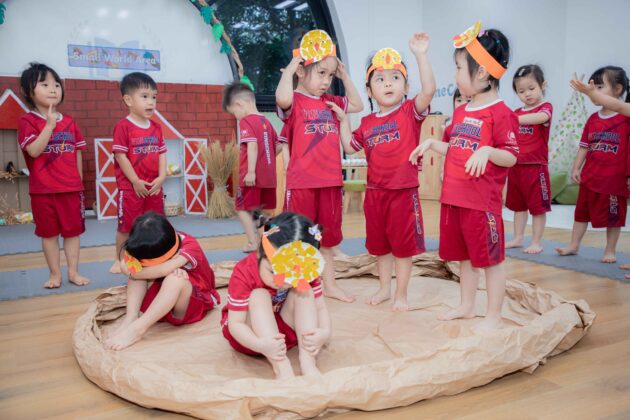
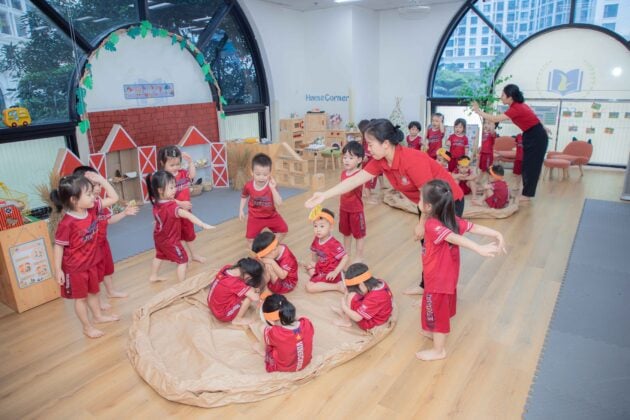
Some children became “chicks” while others were “eggs,” all standing together in one shared “nest.” They continued counting and comparing as they played: “How many are chicks are there?”, “How many are eggs are there?”, and “How many are there in total?”.
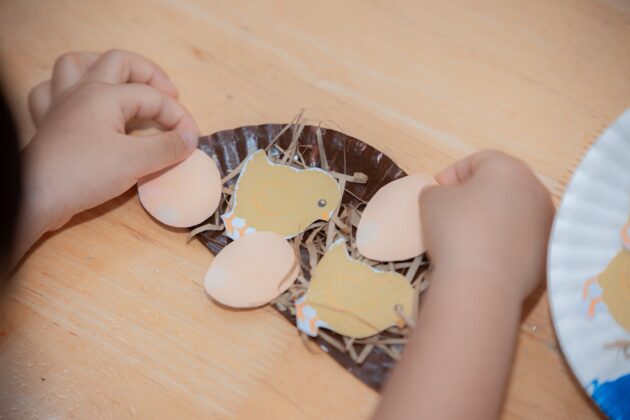
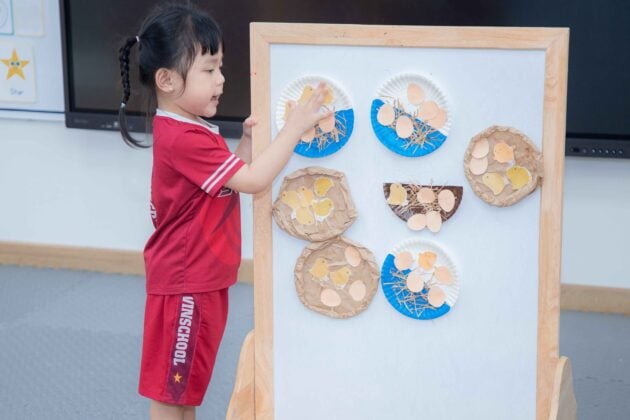
The key takeaway of the lesson was not simply counting to 5, but helping children understand that different combinations can make the same total.
Through these hands-on experiences, children begin to build a strong foundation in number sense and part-whole thinking, an important step in their early mathematical development.