The Right Way to Introduce Solid Foods and Their Unexpected Benefits – August Tips from Vinmec Doctors
My 14-month-old still eats only pureed porridge – is this normal? Does transitioning to solid foods really cause choking or vomiting? My child refuses to chew – why is that? Switching from pureed foods to solids can be a daunting experience for many parents. The fear of choking or digestive issues is common, but delaying this process can result in weaker chewing skills and slower overall development. Vinmec’s nutrition experts say that introducing solid foods at the right time is crucial for your child’s development. It helps them learn to chew and swallow properly, supports digestion, encourages healthy jaw and tooth growth, and even stimulates brain development and fine motor skills. Don’t miss out on this vital stage in your child’s growth!
What does introducing solid foods mean?
Introducing solid foods means gradually getting your child used to foods that have more texture than the purees or porridge they’ve been eating so far. This step is crucial for developing chewing and swallowing skills, and also for familiarizing them with a variety of foods, preparing them for eating like adults.
Why is it important to introduce solid foods?
Around 6 to 12 months of age, it’s crucial to introduce your child to solid foods (like soft rice, chopped vegetables, minced meat, etc.) for the following reasons:
- Developing chewing skills and speech: Chewing solid foods helps strengthen jaw muscles, which is key for clearer speech and proper jaw and tooth development.
- Stimulating taste and improving digestion: A variety of solid foods enhances your child’s ability to perceive different flavors and makes mealtime more enjoyable. Chewing also activates digestive enzymes, which supports more efficient digestion.
- Preventing picky eating: Exposing your child to a variety of textures early on reduces the likelihood of picky eating later. Research from Pediatrics (2014) shows that children who experience diverse foods before age two are more likely to accept new foods.
- Supporting brain development: The act of chewing and manipulating food engages fine motor skills and hand-eye coordination, which stimulates brain activity and aids cognitive development.
When should you start introducing solid foods?
The ideal time varies depending on your child’s development, but generally, particularly around their first birthday. If a child isn’t ready, parents shouldn’t rush it. Instead, they should be patient, observe, and try again after a few weeks.
The period between 6 and 12 months is ideal for gradually transitioning from purees to coarser, softer foods, and eventually small bite-sized pieces. This should always be adjusted based on the child’s individual readiness.
- 6-8 months: Coarser purees, porridge with small lumps
- 8-10 months: Steamed soft vegetables, teething biscuits, ripe fruits
- 10-12 months: Soft rice, small pieces of meat, finger foods
Signs that your child is ready for solid foods:
- They can sit up without support
- They start to chew or bite toys or teething biscuits
- They show interest in the food you’re eating and try to grab it
How to introduce solid foods safely
Step 1: Start slowly
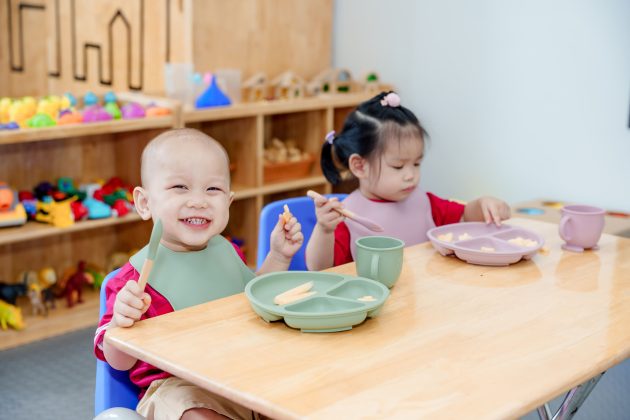
Step 2: Gradually increase texture
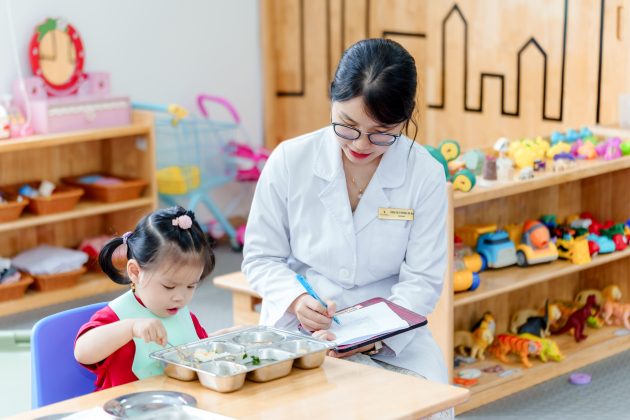
Step 3: Encourage self-feeding
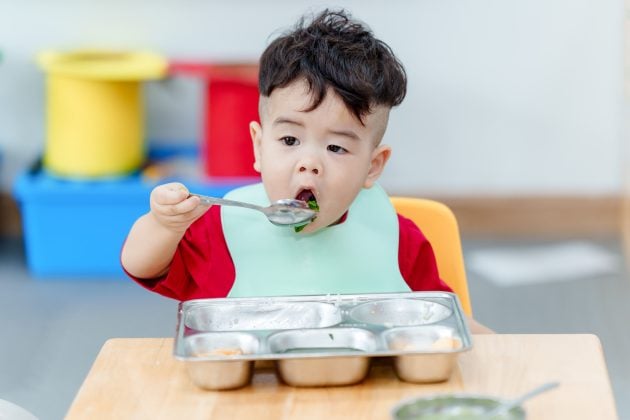
Step 4: Offer a variety of foods
Long-term benefits of solid foods
- Better oral health: Children who start eating solids early on are less likely to suffer from tooth decay and jaw alignment issues.
- Independence: Self-feeding builds confidence and independence in other areas of development.
- Balanced nutrition: A diverse diet rich in solid foods helps children get all the nutrients they need for growth.
- Adequate intake of essential nutrients: Solid foods provide essential proteins (meat, fish, eggs), fats (oils, butter), carbohydrates (rice, potatoes, pasta), vitamins, minerals, fiber (vegetables, fruits), and water.
Conclusion
Introducing solid foods at the right time is crucial for your child’s physical and mental development. It helps them learn essential skills like chewing and swallowing, improves digestion, and prepares them for a healthy diet in the future.
If you have any concerns about introducing solid foods to your child, don’t hesitate to consult a doctor or nutrition expert.
References:
- Impact of Food Texture on Oral Processing and Chewing Development in Young Children.
Journal of Texture Studies (2017) - Early Exposure to Dietary Diversity and Its Impact on Food Acceptance in Children.
Pediatrics (2014), Volume 133, Issue 6 - Oral Motor Skills and Their Relationship to Speech Development in Infants and Toddlers.
Journal of Speech, Language, and Hearing Research, Volume 61, Issue 3 - Influence of Chewing Patterns on Dental Health in Early Childhood.
Journal of the American Dental Association, Volume 150, Issue 7