Joyful learning in nature: Practicing math with lovely animals at the farm
During a recent field trip to the farm, Vinschool kindergarten students had a fantastic opportunity to connect with nature and meet some fascinating animal friends, including goats, sheep, horses, camels, and cows. This was more than just a sightseeing adventure; each activity was thoughtfully designed to engage students in learning math, science, and social skills through hands-on experiences.
Counting and Recording Animal Numbers
As the children observed the goats, sheep, horses, camels, and cows, they participated in a fun counting activity, recording the number of each animal species in small notebooks.
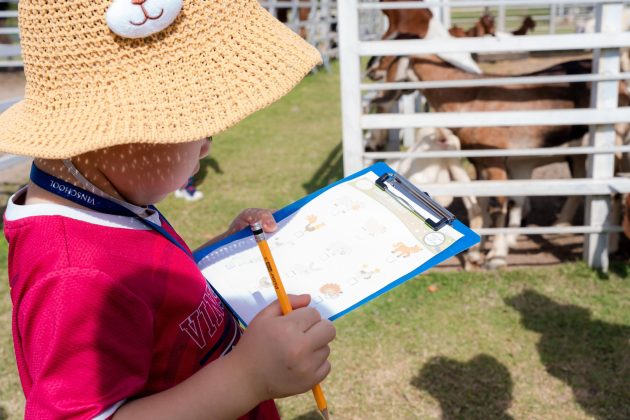
Comparing sizes and traits of different species
Under the guidance of their teachers, the children observed the unique traits of each species: the soft, curly fleece of the sheep, the tall stature of the horses, and the distinctive humps of the camels. They compared the size and shape of each animal, learning to recognize differences in height, size, and weight.
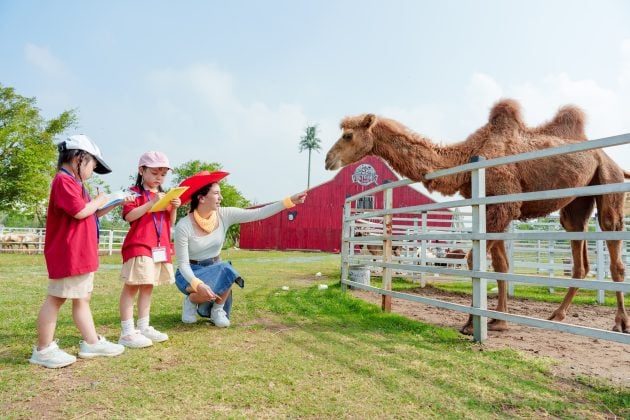
Classifying animals by characteristics – Building systematic thinking
This classification activity encouraged children to think systematically as they learned to distinguish between animal traits, gaining skills in identifying, organizing, and grouping objects by attributes – a valuable foundation for both math and science.
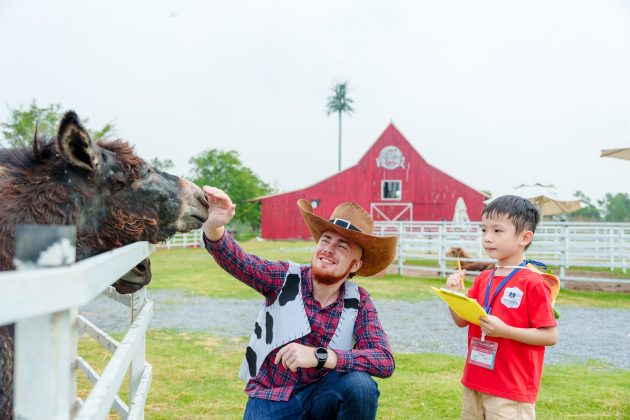
Interacting and caring for animals – Fostering compassion and nurturing
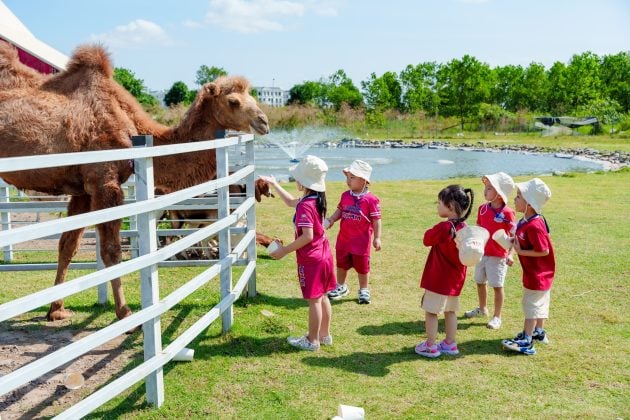
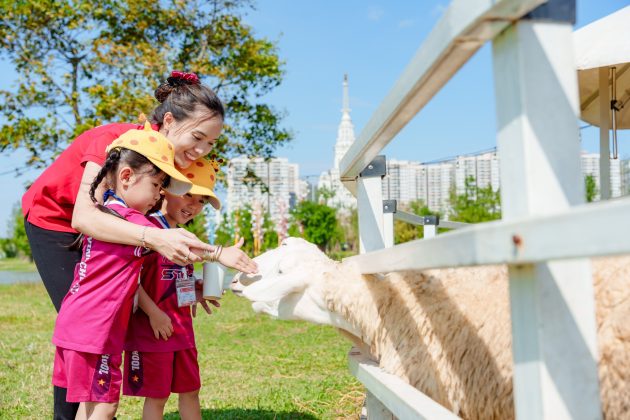
The children also had the chance to feed the animals, offering carrots and hay to the horses and watching the goats and sheep nibble on leaves. They learned to approach the animals gently, being careful not to startle them, and developed meaningful connections with their farm friends.
Integrating math, science, and social skills
The exploration at the farm provided a natural, enriching math lesson integrated with science knowledge and social skill development. The children became familiar with concepts like counting, classifying, and comparing, all while fostering a love for animals and building patience as they observed the unique traits of each one. This experience sparked curiosity, inspired a love of learning, and helped students develop essential foundational skills for the future.