“Decoding” psychological theories in Talk Psychology 2026 – Part 2: Behavioral and humanistic approaches
Following Part 1 of the series “Decoding Psychological Theories in Talk Psychology 2026”, which explored the Biological and Psychoanalytic approaches, Part 2 continues with two other key perspectives: Behavioral Psychology and Humanistic Psychology, offering deeper insights into how environmental factors and personal agency shape individual choices.
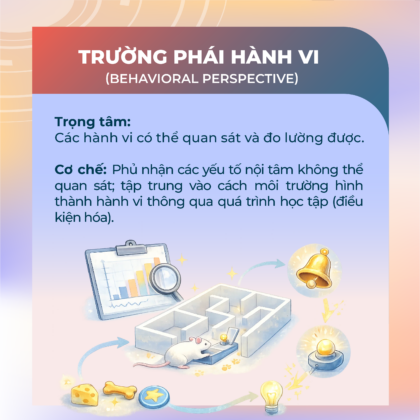
BEHAVIORAL PSYCHOLOGY: Behavioral Psychology focuses on observable and measurable behaviors. From this perspective, behavior is not innate but is shaped through learning processes influenced by the environment—particularly through reinforcement and consequences. At its core lies a simple principle: people tend to repeat behaviors that bring rewards and avoid those that cause discomfort. Key mechanisms include:
- Operant Conditioning (B. F. Skinner): Behavior is strengthened or weakened depending on its consequences. Actions that bring positive feelings or relief are more likely to be repeated; over time, repeated behaviors gradually form habits.
- Avoidance Behavior: Avoidance may reduce stress in the short term, but in the long run, it reinforces the original fear or pressure, creating a cycle: avoidance → temporary relief → continued avoidance.
- Observational Learning (Albert Bandura): Individuals tend to observe and internalize models from their surroundings, which then shape their thinking, choices, and behaviors.
- Gradual Habit Formation: Many skills and behaviors are developed progressively through repeated and intentional environmental influences.
HUMANISTIC PSYCHOLOGY: Humanistic Psychology views individuals through their potential for growth and their drive toward self-actualization. This approach emphasizes the importance of an empathetic environment and unconditional acceptance in helping individuals find their own direction. More specifically, related theories and concepts highlight key factors that influence personal development and decision-making, including:
- Basic Needs as the Foundation for Growth (Maslow’s Hierarchy of Needs – Abraham Maslow): Personal development is sustainable only when basic needs—such as safety, recognition, and respect—are fulfilled. Without this foundation, the process of identity formation can become unstable.
- An Empathetic and Non-judgmental Environment (Unconditional Positive Regard – Carl Rogers): Being accepted without judgment by family and school creates psychological safety, enabling students to make confident choices and take responsibility for them.
- Self-perception and Belief in One’s Abilities (Self-concept & Self-efficacy – Albert Bandura): How students perceive their own value and their belief in their capabilities directly influence whether they are willing to take risks, make choices, and pursue goals.
- Influence of Immediate Environments (Microsystem – Ecological Systems Theory – Urie Bronfenbrenner): Family and school—the closest environments—continuously shape students’ emotions, motivation, and interactions with the world.

Don’t miss Talk Psychology! Join the live session to watch student counselors in action, gain expert insights, and see how Vinsers apply psychological theories to “decode” a challenging psychological profile: 8:00 PM | Thursday, April 2, 2026 on Vinschool Fanpage
————-
With the simulation-based learning model “MINDLAB – Decoding Psychological Profiles,” Talk Psychology 2026—an academic forum applying AP Psychology knowledge for Vinschool high school students—creates a space for students to step into the role of “aspiring psychologists” and directly analyze a simulated case. Beyond academic knowledge, the program fosters systems thinking, evidence-based reasoning, and a balanced, empathetic perspective when approaching complex psychological issues in real life.