Cambridge Media Studies at Vinschool: “Decoding” media – How Vinsers develop analytical thinking and constructive agency in the digital age
In an era where students are constantly exposed to films, social media, digital platforms, and an overwhelming amount of information every day, what truly creates a difference is not simply how well they can use technology, but their ability to understand how information is constructed, why it is created, and how it shapes public perception.
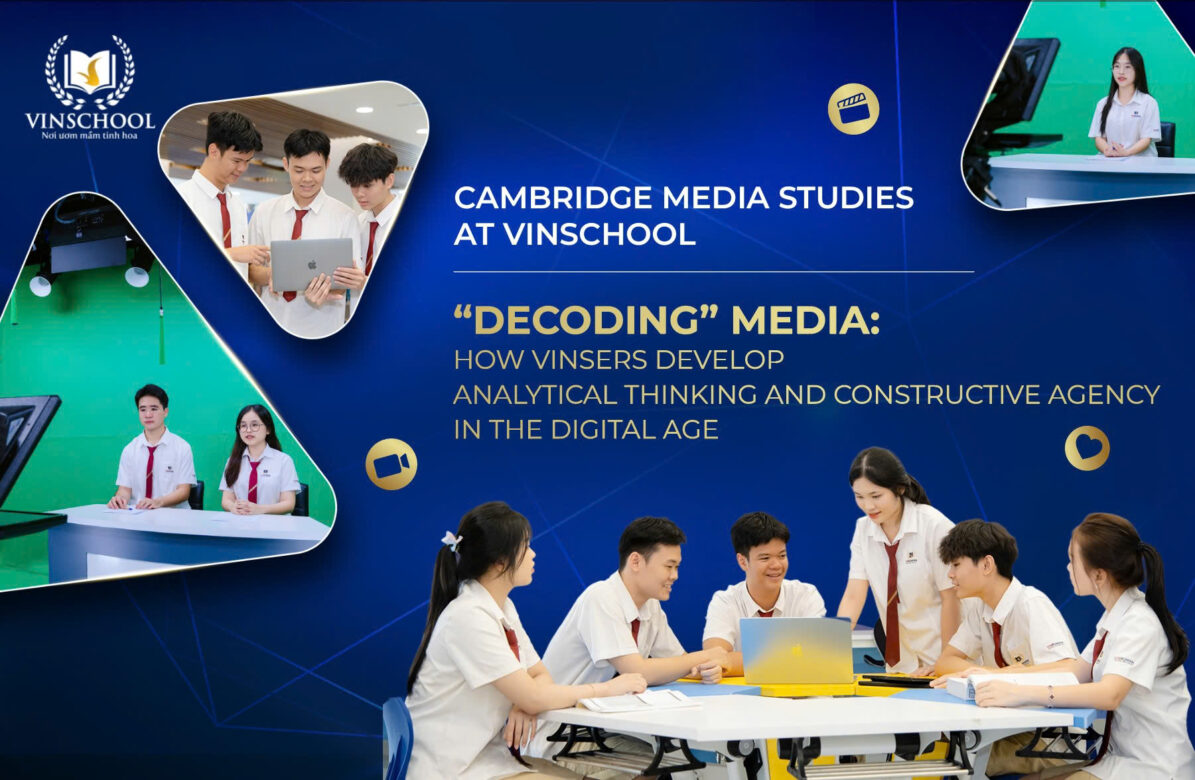
At Vinschool, Cambridge Media Studies is offered to Cambridge students from Grade 11 as part of the Cambridge International AS & A Level pathway. Through this subject, students develop critical and analytical skills to examine media products and messages from multiple perspectives, understand the role and influence of media on society, and gradually master the ability to create purposeful, professional media products that can generate meaningful impact within the community.
One of the outstanding features of Cambridge Media Studies is its balance between academic depth and creative practice. Within the A Level assessment structure, coursework accounts for 50% of the total grade, reflecting the subject’s emphasis on combining analytical thinking with media production skills. Students not only learn how media operates, but also progressively develop the ability to construct meaningful messages tailored to specific audiences and social contexts.
DECODING MEDIA: UNDERSTANDING HOW MESSAGES ARE CONSTRUCTED
The foundation of Cambridge Media Studies begins with the understanding that every media product is intentionally constructed. Students are introduced to four core concepts of the curriculum:
- Media Language: how images, sound, editing techniques, and design create meaning;
- Representation: how media portrays people, communities, and social issues;
- Audience: how media content targets and influences different groups of audiences;
- Media Industries: how media organizations operate within the context of digital technology and globalization.
Building on this foundation, students engage with familiar analytical approaches in Media Studies such as textual analysis, audience analysis, and comparative analysis. They learn to analyze films, advertisements, social media content, and contemporary media products within specific cultural and social contexts, allowing them to better understand how media constructs meaning and influences public perception. Through discussions, case studies, and collaborative projects, students gradually strengthen their ability to question, evaluate information critically, and approach media from a more multidimensional perspective.
“Now, when I watch films with my family, I no longer focus only on the storyline. I also pay attention to how directors use visuals, sound, and editing rhythms to guide the audience’s emotions and communicate messages.” shared Tran Le Vy, a Grade 12 Vinser.
ANALYZING MEDIA IN CONTEMPORARY CONTEXTS
Beyond analyzing media techniques, students are guided to examine media within broader historical, cultural, and social contexts.
In class, students explore contemporary issues such as:
- the influence of technology on information consumption;
- the role of social media in shaping public opinion;
- the balance between freedom of speech and media responsibility;
- and how digital platforms are transforming the relationship between audiences and media producers.
Through research and critical discussion, students gradually move beyond simply receiving information to independently evaluating it in a thoughtful, evidence-based, and multidimensional way — an increasingly essential skill in today’s fast-changing and information-dense media environment. “Studying Media Studies has made me much more aware and critical of the content I consume every day,” shared Nguyen Ly Bao Long, a Grade 12 Vinser.
FROM ACADEMIC ANALYSIS TO CREATIVE PRACTICE
A key highlight of the Cambridge Media Studies programme is that students go beyond analysis to actively create their own media products through practical coursework and portfolio development. In the full A Level pathway, coursework accounts for 50% of the total subject grade.
Throughout this process, students experience the complete workflow of a media project:
- audience research;
- idea development;
- production planning;
- implementation;
- product completion;
- and reflection on creative choices.
Projects may take various forms, including short films, music videos, social media campaigns, or print-based media products depending on coursework requirements. However, the focus is not merely on technical execution, but on students’ ability to make informed creative decisions based on communication objectives, audience understanding, and academic concepts learned throughout the course.
To support students throughout this journey, teachers at Vinschool provide continuous assessment and closely monitor each student’s progress to ensure learning pathways are aligned with individual strengths and learning styles.
According to Mr. David, a Media Studies teacher at Vinschool: “What makes each project unique is not only the technical aspect, but also the maturity of students’ thinking, their ability to organize ideas, and how effectively they apply academic understanding to their creative decisions.”
Many final projects produced by AS and A Level students clearly demonstrate the successful application of academic knowledge into creative practice: from using editing rhythms to create tension, selecting color palettes to shape emotional responses, to constructing characters that reflect the perspectives of content creators.
SKILLS AND COMPETENCIES DEVELOPED THROUGH THE SUBJECT
Through Cambridge Media Studies, students simultaneously develop academic competencies and essential workplace skills relevant to the modern world, including:
- analytical and critical thinking;
- research and information evaluation skills;
- academic writing and argument-building abilities;
- project management skills;
- the ability to communicate ideas through concrete products;
- and the capacity to work within structured creative processes.
Alongside academic learning, Vinsers are encouraged and supported in nurturing their passions and creative potential through a wide range of extracurricular activities, including filmmaking clubs and domestic as well as international film competitions. These practical experiences allow students to strengthen their skills, broaden their perspectives, and gradually develop the confidence and mindset of future content creators.
UNIVERSITY PATHWAYS AND CONNECTIONS TO THE FUTURE
Thanks to its combination of academic analysis and practical portfolio development, Cambridge Media Studies provides a strong foundation for university pathways related to Media, Film, Communications, Marketing, and Creative Industries. At the same time, the subject familiarizes students with many forms of learning and assessment commonly used in international universities, such as coursework, independent research, and project-based learning.
The achievements of Vinsers in recent years clearly reflect the effectiveness of this educational direction. In 2025, more than 20% of Cambridge students taking Media Studies A Level achieved grades A–A*. In the same year, Vinser Nguyen Bentley Minh Nhat received an 8-billion-VND scholarship in Film and Business at Dartmouth College — an Ivy League institution with an acceptance rate of approximately 6%.
As media and technology continue to evolve rapidly, the ability to analyze, evaluate, and create messages responsibly is becoming increasingly essential. Cambridge Media Studies therefore not only helps students better understand the contemporary media landscape, but also equips them with the academic mindset, creative capacity, and professional competencies needed to thrive in today’s globalized world.