
Common Mistakes in Child First Aid and Their Hidden Risks
When a child encounters an emergency, such as choking, aspiration, burns, or falls, a parent’s instinct is to rush in and help with all their heart. However, in clinical practice, pediatricians often witness how “well-intentioned but incorrect actions” unintentionally place the child in greater danger. Understanding proper first-aid principles not only helps parents respond accurately but also preserves the critical window that can save a child’s life.
1. Choking: Why the “blind finger sweep” is the most dangerous reflex
Common mistakes:
- Performing a blind finger sweep (sweeping the throat when the object is not clearly visible).
- Inverting, violently shaking, or running around when the child is turning blue (cyanotic).
- Giving back blows while the child is still coughing forcefully.
The child’s cough is the natural mechanism to expel the object. Giving back blows or performing a finger sweep while the child is coughing effectively can turn a partial obstruction into a complete, immediate blockage.
Improper finger-sweeping can also push the object deeper, causing mucosal injury, bleeding, or triggering laryngeal spasms, leading to acute respiratory arrest.
Correct action:
If the child can still cough, speak, or cry → Do not intervene aggressively; encourage them to cough.
- If the child cannot cough, is turning blue, or is silent → treat the complete obstruction immediately:
- Children <1 year: Perform 5 alternating back blows and chest thrusts.
- Children ≥1 year: Perform the standard Heimlich maneuver.
- Call 115 immediately if the child stops breathing, turns blue, or loses consciousness.
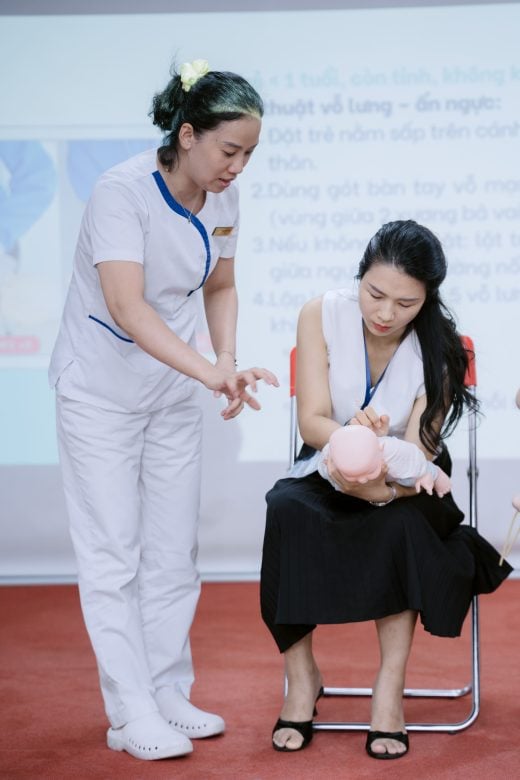
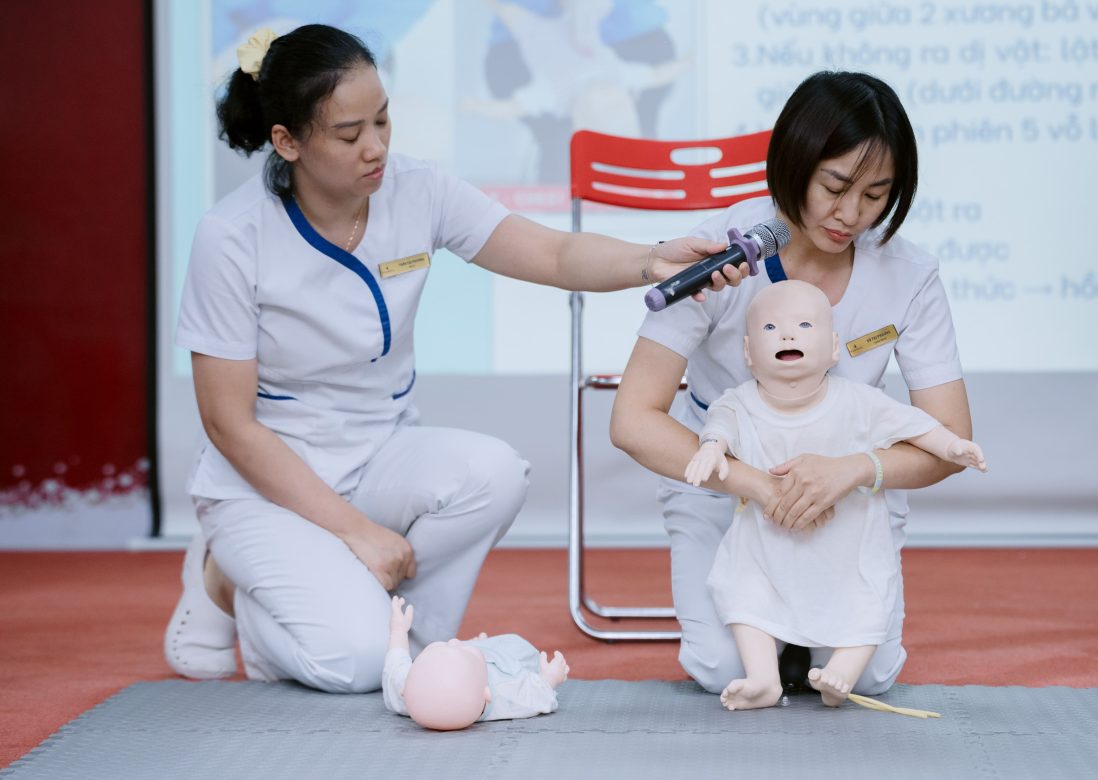
Studies show that over 60% of pediatric choking cases worsen due to incorrect initial management, especially blind finger-sweeps or inverting the child.
2. Milk or water aspiration – Inverting wont’ help them breathe
Common mistakes:
- Inverting the child or forcefully patting their back while the child is still breathing rapidly.
- Resuming feeding or giving fluids immediately after the aspiration episode.
When fluid spills into the trachea, the cough reflex is trying to push it out. Inverting or patting the back can cause the fluid to move deeper into the bronchi, leading to aspiration pneumonia or respiratory arrest due to laryngeal spasms.
Correct action:
- Stop feeding/drinking immediately.
- Place the child on their side, with the head lower than the body, and gently pat the back to allow fluid to drain.
- If the child shows difficulty breathing, cyanosis, or apnea → follow the complete airway obstruction procedures above and call emergency services.
- Follow up is required for 24–48 hours, as aspiration pneumonia may develop later.
3. Falls and head trauma – Don’t sit them up immediately
Common mistakes:
- Immediately lifting or sitting the child up after a fall, especially if they hit their head.
- Giving the child food, drink, or allowing them to sleep deeply immediately after the injury.
- Failing to monitor after impact because “the child is still awake.”
Young children have a large head and weak neck muscles, making them prone to neck injuries, concussion, or intracranial bleeding after a fall. Moving or sitting them up too soon can worsen a spinal injury or cause a hematoma to spread. Furthermore, some serious injuries do not show immediate symptoms – the child may be awake but exhibit vomiting, lethargy, or seizures hours later.
Correct action:
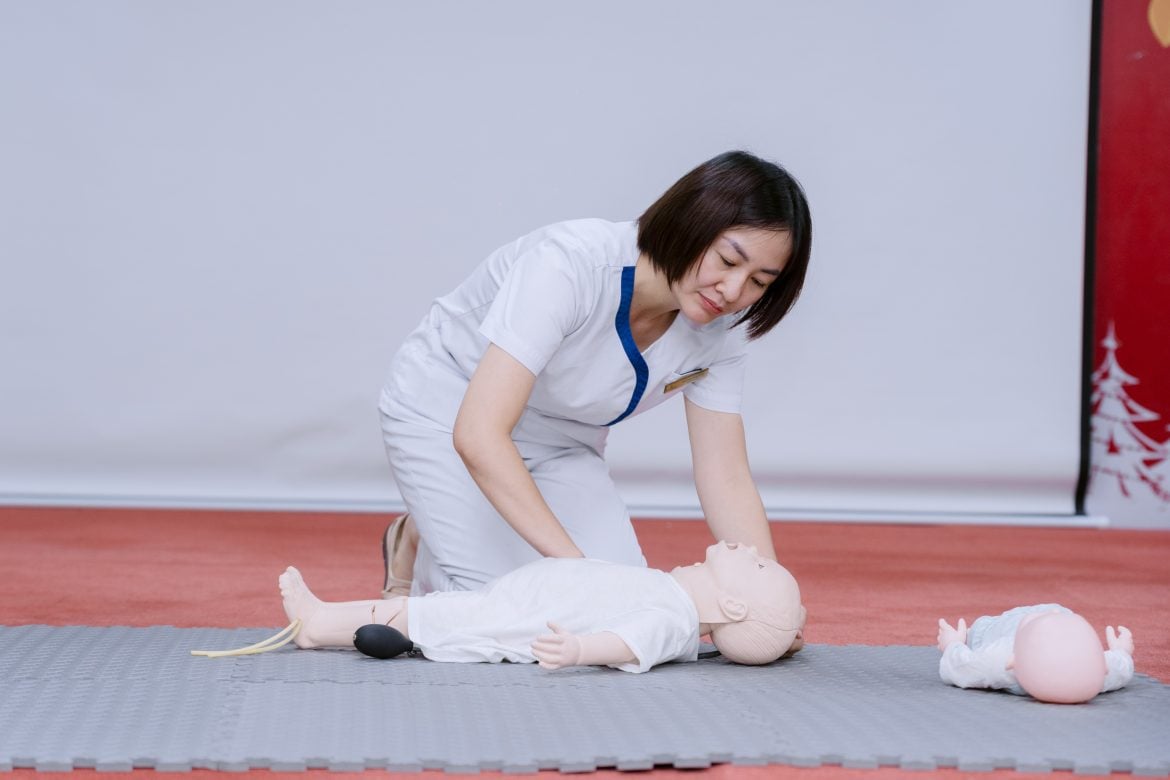
- Maintain the child’s current position and avoid rotating the neck. Monitor spontaneous movement to assess for restricted mobility, and stabilize the neck (if needed).
- Check consciousness, breathing, and pulse.
- If the child is vomiting, bleeding, drowsy, difficult to wake, or seizing → transport to the emergency room immediately.
- If the child is awake and alert, monitoring is still required for at least 24-48 hours.
4. Burns – Toothpaste contaminates, it does not cool
Common mistakes:
- Applying toothpaste, fish sauce, oil, or egg whites to the burn.
- Applying ice directly or tightly bandaging the burn with fabric.
Folk remedies do not cool the burn and often contaminate the wound, causing infection and deeper damage. Some topical oils or toothpastes contain essential oils and alcohol, creating a “false cooling” sensation on the skin but failing to actually lower the temperature of the burn. Direct ice application causes severe vasoconstriction, reducing blood flow and worsening tissue damage.
Correct action:
- Rinse the burned area with running cool water (20–25°C) continuously for 15–20 minutes.
- Cover lightly with clean gauze; do not bandage tightly and do not burst blisters.
- Seek medical care for deep or large burns or burns on the face, hands, feet, genitals, or in very young children.
Emergency warning signs – Seek immediate hospital care if the child:
- Turns blue, stops breathing, or has a seizure.
- Loses consciousness or does not respond.
- Vomits repeatedly or bleeds from the ear/nose after a fall.
- Has a deep or extensive burns.
- Develops increasing breathing difficulty or swelling of lips or throat (suspected anaphylaxis or foreign object).
Professional Message
“Parents’ instinct to protect their child is natural. But the correct instinct – guided by medical knowledge – is what saves lives.”

Enrolling in annual first-aid training equips parents with the knowledge and skills to assess emergencies and provide proper initial care before medical help arrives. This not only ensures safer follow-up treatment but also prevents a child’s condition from worsening due to incorrect or delayed response.