Vinschool Launches Comprehensive Artificial Intelligence Curriculum from Kindergarten to Grade 12
Vinschool Education System has officially announced the implementation of a comprehensive Artificial Intelligence (AI) curriculum for all students aged 5 to 18 across its 54 campuses nationwide, starting from the 2025–2026 academic year.
This marks the first time in Vietnam that a structured AI competency framework has been systematically developed for students as young as kindergarten, with the aim of equipping them with the mindset, skills, and ethical awareness needed to engage proactively and responsibly in the AI era.
More than just an introduction to emerging technologies, Vinschool’s AI program is part of a long-term educational strategy to establish AI as an essential 21st-century learning competency. The program is built upon three integrated components: an AI-embedded curriculum, a comprehensive AI competency framework, and an assessment toolkit for both students and teachers.
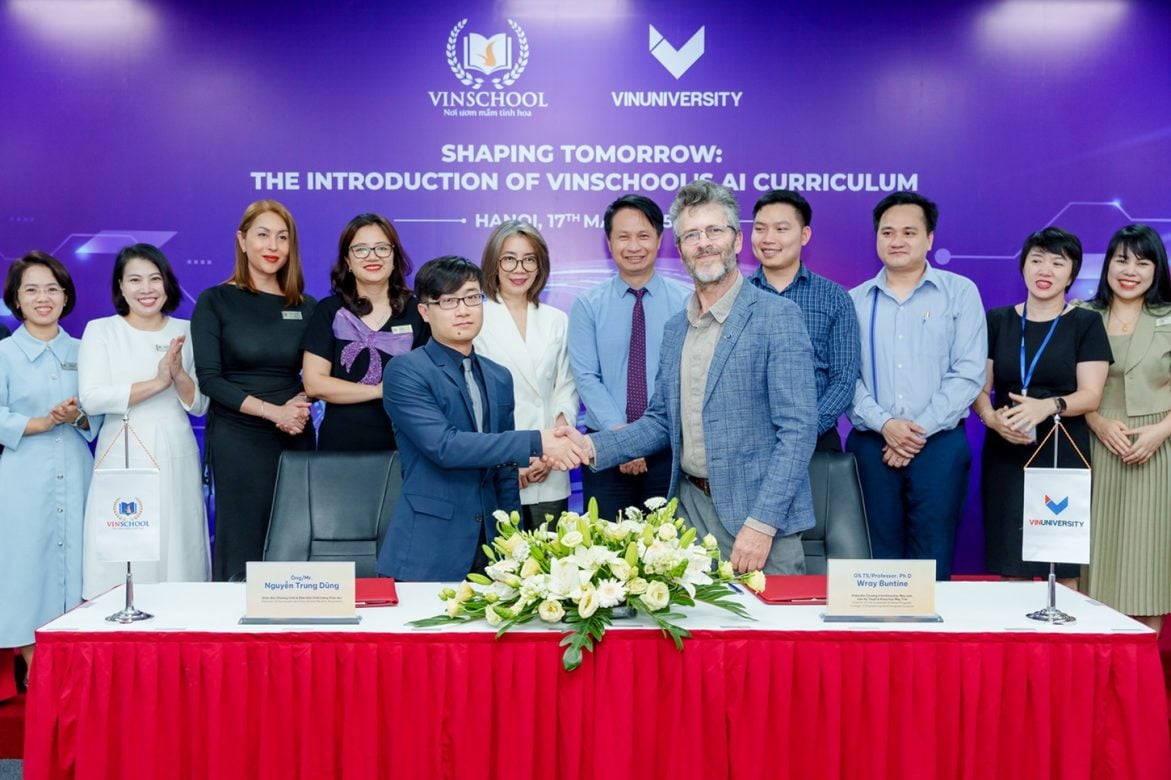
Developed in collaboration with the College of Engineering and Computer Science at VinUniversity, the AI competency framework follows a holistic, cross-disciplinary model. Rather than being taught as a standalone subject, AI is interwoven into existing subjects—particularly Information Technology and Computer Science—and is incorporated into the learning outcomes of other disciplines. This approach enables students to develop AI competencies naturally, as part of their everyday learning experience.
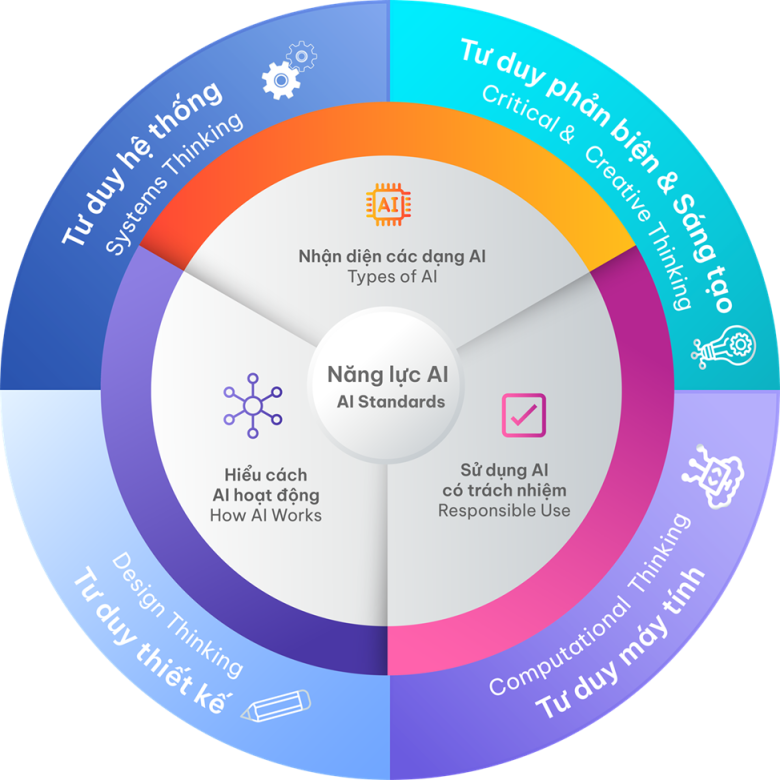
The curriculum centers around three core competency strands:
- Understanding how AI works: Students learn the fundamental principles of AI systems—from data to algorithms—while developing computational thinking skills such as pattern recognition, problem decomposition, and algorithm design.
- Recognizing different types of AI: Through hands-on experience with diverse AI tools and platforms, students gain insight into the roles AI plays in daily life and across future career fields.
- Using AI responsibly: The program fosters digital ethics and awareness of risks such as algorithmic bias, misinformation, and the societal impact of technology, empowering students to use AI mindfully, humanely, and ethically.
Interwoven throughout these strands are four core types of thinking that Vinschool prioritizes: computational thinking, systems thinking, design thinking, and creative-critical thinking. The framework is tiered by grade level, ensuring alignment with students’ cognitive and psychological development stages.
Commenting on this strategic direction, Mr. Nguyễn Trung Dũng, Director of Curriculum and Educational Quality at Vinschool, stated: “Our goal is not just to teach students how to use technology, but to help them develop higher-order thinking, embrace lifelong learning, and be ready to shape their own futures. The AI curriculum is part of our broader mission to nurture global citizens—individuals with strong character, intelligence, and adaptability.”
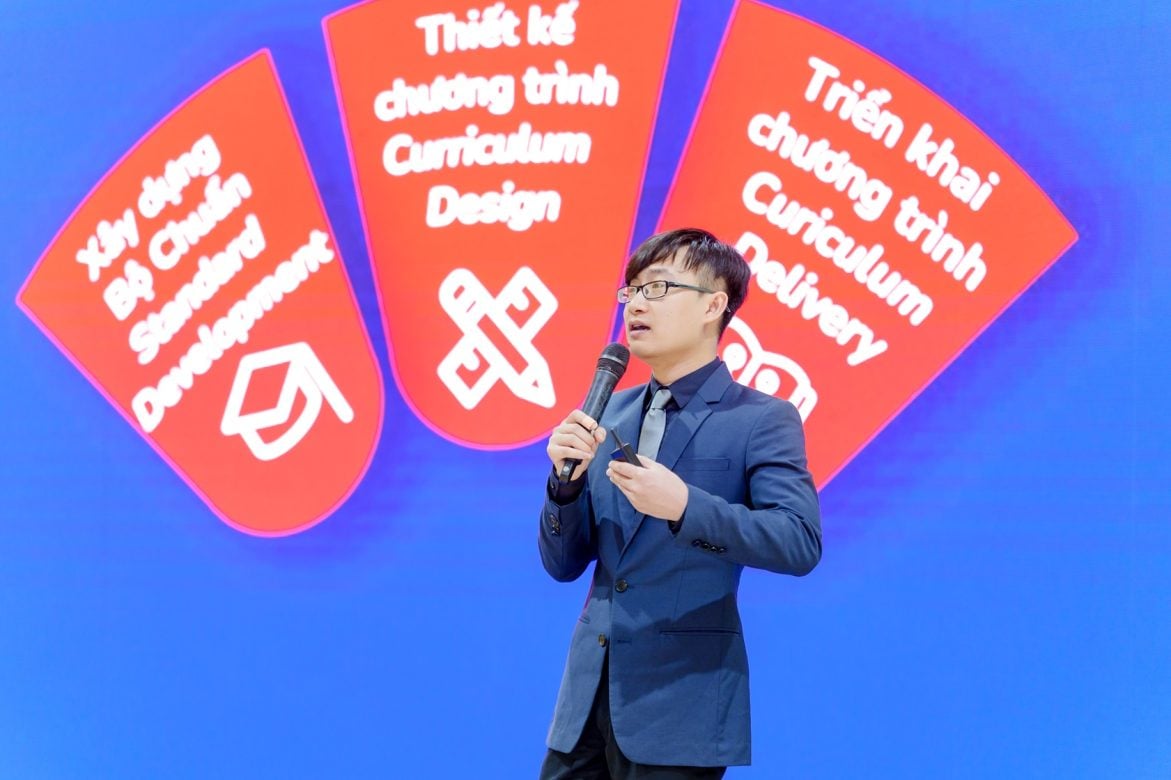
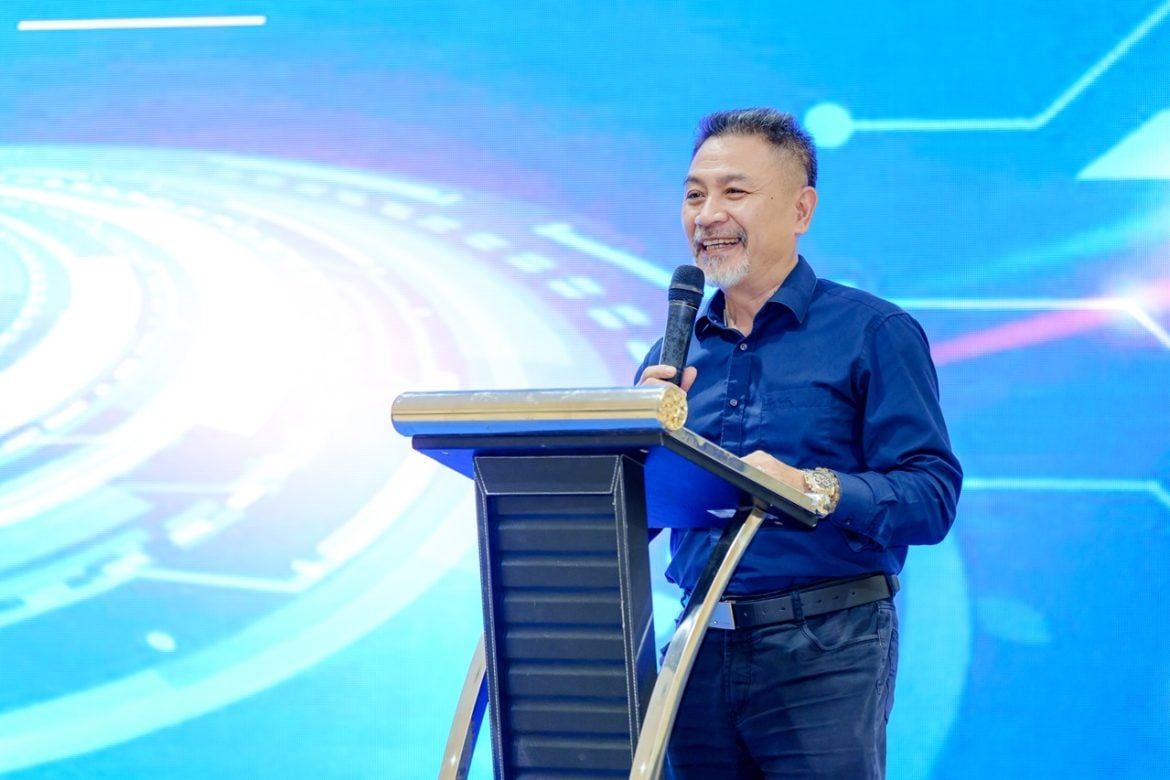
According to Assoc. Prof. Dr. Tôn Quang Cường, Head of the Department of Educational Technology at the University of Education, Vietnam National University, Hanoi, Vinschool’s initiative marks a significant milestone: “The development of an AI competency framework by Vinschool is a pioneering step in today’s education landscape. Integrating AI across subjects from kindergarten to grade 12 reflects a strategic vision that promotes computational thinking, critical reasoning, digital ethics, and creativity. This initiative seamlessly embeds AI into daily learning experiences and reflects the evolving synergy between technology, education, and human development.”
More than an academic breakthrough, Vinschool’s AI program lays a strategic foundation for students to develop vital competencies for the future—critical thinking, digital ethics, creativity, and adaptability. These are essential tools for the next generation of global citizens—individuals who not only use technology, but understand, master, and shape it for a better world.